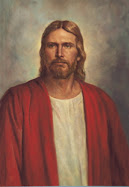
I belong to the Church of Jesus Christ of Latter-day Saints. I know who I am. I know God's plan. I'll follow him in faith. I believe in the Savior, Jesus Christ. I'll honor his name. I'll do what is right; I'll follow his light. His truth I will proclaim.

I Know that My Redeemer Lives!

I Know that My Redeemer Lives!
Showing posts with label Christmas. Show all posts

Sunday, December 25, 2016

LDS Hymn #214


I believe I heard the background story to this hymn when I was a teenager. By that point, I knew it was the Christmas hymn that was hard to play with its 3 flats and accidentals throughout. Also in ward choir we sang a version where the 3rd verse went into a minor key, which made that somber verse stand out even more, and its change to a major key in the 4th verse bring out the joy and hope in the author/singer's realization. Always, always loved the words of this song, particularly the last 3.

The song took on another special meaning to me when my first family ward on my own, without my actual family in it with me, had a magnificent pipe organ with these amazing chimes. It was a tradition in our ward to play this hymn on the Sunday we had our Christmas Sacrament program, with those chimes. In the last 2 months, the ward boundaries were reorganized and our ward ended up meeting in a new building, with an obviously inferior organ. Yet our organist still played this with gusto this morning, making those chimes work as well as she could. And I still enjoyed singing these words of hope, joy, and redemption because Christ brought that as His gift to us, He and His life being Heavenly Father's gift to us.

Favorite lines:
*"Had rolled along th'unbroken song"
*"The wrong shall fail, the right prevail"
*"Till, ringing, singing, on its way"


From the history book
Longfellow's original poem was 7 stanzas long, published in 1867. Original Verse 4 and 5 were more of the author's grief over the Civil War occurring in his country (United States) at that time. The original 3rd verse is now the last because they wanted the song to end on a more hopeful, optimistic feeling. I'm great with that!

Lyrics

  1. 1. I heard the bells on Christmas day
    Their old familiar carols play,
    And wild and sweet the words repeat
    Of peace on earth, good will to men.
  2. 2. I thought how, as the day had come,
    The belfries of all Christendom
    Had rolled along th'unbroken song
    Of peace on earth, good will to men.
  3. 3. And in despair I bowed my head:
    "There is no peace on earth," I said,
    "For hate is strong and mocks the song
    Of peace on earth, good will to men."
  4. 4. Then pealed the bells more loud and deep:
    "God is not dead, nor doth he sleep;
    The wrong shall fail, the right prevail,
    With peace on earth, good will to men."
  5. 5. Till, ringing, singing, on its way,
    The world revolved from night to day,
    A voice, a chime, a chant sublime,
    Of peace on earth, good will to men!
  6. Text: Henry Wadsworth Longfellow, 1807-1882
    Music: John Baptiste Calkin, 1827-1905


Saturday, December 24, 2016

LDS Hymn #213


This is possibly one of my most favorite Christmas hymns. It's up there with Away in a Manger for loving it simple for its tune. Sweet and pure, yet it also moves! Love those moving parts. First came to fully embrace this hymn when our 7th grade choir sang the version of this hymn combined with Pachelbel's Canon in D. I loved how well it fit with a classical song I loved. Later in college, my roommate (and the ward choir director) picked the Mack Wilberg arrangement. That is when I learned there were more than the 2 verses we see in our hymnbook, which simply tell the story of the angels. I fell in love with that 3rd verse. Got a copy of that song as soon as I could! (It's the one I have included as the video.) Because of that one verse, this hymn has stood out to me more each Christmas. Last year my choir sang another arrangement, but it still included the 3rd verse. I have had my ward choir sing the Wilberg arrangement. Any time I can have this song sung, I will do so.

From the history book
I knew "Noel" was a French word, but I didn't know that it was related to the Latin word natalis which means "birthday." She points out that the hymn is loved for its simplicity. Agreed. First printed in 1833, the hymn had nine verses! Three of those verses change the focus from the shepherds to the wise men. But my favorite is this one:

Then let us all with one accord
Sing praises to our heavenly Lord
That hath made Heaven and earth of nought
And with his blood mankind has bought.

No information on who wrote the lyrics or the tune, but I am quite grateful they did so that I have this wonderful hymn to sing.


Lyrics

  1. 1. The first Noel the angel did say
    Was to certain poor shepherds in fields as they lay,
    In fields where they lay keeping their sheep
    On a cold winter's night that was so deep.
  2. (Chorus)
    Noel, Noel, Noel, Noel!
    Born is the King of Israel!
  3. 2. They looked up and saw a star
    Shining in the East beyond them far,
    And to the earth it gave great light,
    And so it continued both day and night.
  4. Text and music: Traditional English carol, ca. 17th century

Friday, December 23, 2016

LDS Hymn #212


This is such a fun one to sing! The verses are short--basically one line. And then the really fun chorus with moving parts, especially that bass part! Kind of fun to play with the organ--though I haven't spent a lot of time attempting it. Easier on the piano for sure. But it is a fun one to sing in unison and then break out into those fun parts on the chorus.
Starts with the angels' part of the story, and then applies it to how we can join in the song, which then spreads this to the more worldwide joy, not just what took place on those plains with the shepherds.

Favorite lines: Pretty much the line for Verses 2, 3, and 4. Yep. Redeeming love. We too would rejoice. Help us to sing. Strains sublime. So beautiful! And joyful to sing!

From the history book
This is the one! I knew there was a Christmas hymn written by an LDS man. He wrote this in 1869 for his choir to sing, since he felt they needed a new hymn to sing. A friend wrote some text, but he could not get a tune to work. Then he woke in the middle of the night with the words and tune for this. The words were different from his friend's, but he wanted to give his friend the credit. The friend refused and let John take full credit. This is the only song that he wrote lyrics for, since composing was his talent. The tune is named after his wife. And it points out that there are no plains where the shepherds tended their flocks--they were hills. But it is excused for a man who had never been to that part of the world. He and his friend collaborated on other hymns, one of which is in our current hymnal.

Lyrics

  1. 1. Far, far away on Judea's plains,
    Shepherds of old heard the joyous strains:
  2. (Chorus)
    Glory to God, Glory to God,
    Glory to God in the highest;
    Peace on earth, goodwill to men;
    Peace on earth, goodwill to men!
  3. 2. Sweet are these strains of redeeming love,
    Message of mercy from heav'n above:
  4. 3. Lord, with the angels we too would rejoice;
    Help us to sing with the heart and voice:
  5. 4. Hasten the time when, from ev'ry clime,
    Men shall unite in the strains sublime:
  6. Text and music: John Menzies Macfarlane, 1833-1892

LDS Hymn #211


I know I sang this growing up, but honestly the main memories I have of this song are recent--trying to play this on the organ, with the pedal. I spent months on it and still never passed it to her satisfaction. The irony is my teacher isn't a huge fan of this particular hymn, and I didn't love it to begin with. I don't dislike it, but all those months of playing it brought mostly frustration. So I am hoping to some day be able to appreciate this hymn again. We'll start with today's entry!

The hymn is the angels parts of the story with the shepherds, with scripture-based quotes. Favorite line is the very last: "Goodwill henceforth from heav'n to men Begin and never cease."

From the history book
Written in 1700. It has been around awhile. Emma Smith included a version in the 1841 hymnal. It mentions that it has been paired with many tunes in hymnals. I believe that is why my organ teacher doesn't like this one, because she prefers a different tune. Maybe I should research some of the other tunes and I will appreciate this song bettter!

Lyrics

  1. 1. While shepherds watch'd their flocks by night,
    All seated on the ground,
    The angel of the Lord came down,
    And glory shone around.
    "Fear not," said he, for mighty dread
    Had seized their troubled mind;
    "Glad tidings of great joy I bring
    To you and all mankind."
  2. 2. "To you, in David's town this day,
    Is born of David's line
    The Savior who is Christ the Lord,
    And this shall be the sign:
    The heav'nly Babe you there shall find
    To human view displayed,
    All meanly wrapped in swathing bands,
    And in a manger laid."
  3. 3. Thus spake the seraph, and forthwith
    Appeared a shining throng
    Of angels praising God, who thus
    Addressed their joyful song:
    "All glory be to God on high
    And on the earth be peace.
    Goodwill henceforth from heav'n to men
    Begin and never cease."
  4. Text: Nahum Tate, 1652-1715; based on Luke 2:8-14
    Music: Yorkshire carol, ca. 1800


Thursday, December 22, 2016

LDS Hymn #210


I like singing this one for its ending. The second line goes up and pauses, then sings a Hosanna chorus. Always enjoyed singing that. First hymn that mentions the wise men in the story. Indeed, the first two verses are about their part of the story. The third mentions the angels.

Favorite lines:
*"The wondrous little Stranger"
*"And still is sung in ev'ry tongue The angels' song of glory"
*And shall not cease till holy peace In all the earth is growing"

From the history book
Mentions how the star is a symbol of peace for the world. Nothing is known about the author or composer, but it first appeared in LDS hymnody in 1884. The book points out that the wise men probably didn't hear the angels singing. Well, how do they know? If angels and a star guided shepherds, why not both for wise men? Weren't wise men considered prophets? Could not angels sing to and converse with them? Was it not such a joyous occasion with singing about more than once? Oh well--to each their own interpretation.

Lyrics

  1. 1. With wond'ring awe the wisemen saw
    The star in heaven springing,
    And with delight, in peaceful night,
    They heard the angels singing:
  2. (Chorus)
    Hosanna, hosanna, hosanna to his name!
  3. 2. By light of star they traveled far
    To seek the lowly manger,
    A humble bed wherein was laid
    The wondrous little Stranger.
  4. 3. And still is found, the world around,
    The old and hallowed story,
    And still is sung in ev'ry tongue
    The angels' song of glory:
  5. 4. The heav'nly star its rays afar
    On ev'ry land is throwing,
    And shall not cease till holy peace
    In all the earth is growing.
  6. Text and music: Anon., Laudis Corona, Boston, 1885

LDS Hymn #209

Hymn #209 - Hark! The Herald Angels Sing


This is one of those exciting songs, rather than one of the slower ones. The joyous "Hallelujah" kind! In this song, you almost get to feel like the angels themselves singing and proclaiming the Savior's birth.

My favorite lines: "Light and life to all he brings" and "Born that man no more may die."

From the history book
The book mentions being part of the angel choir, too. The text was first published in 1739. Some wording changes made in hymnody. And two verses that didn't correspond to LDS beliefs were not included in our 1985 hymnal (which might make sense why there are only 2 and I felt it was a bit short!). I have heard one of those hymns in my version of the song by Linda Eder. Felix Mendelssohn's melody is the song that eventually was set to this hymn. He wrote it in honor of the 400th anniversary of the invention of printing and didn't thing the tune would ever serve as a musical setting for a sacred text. Thank goodness he wasn't right!

Lyrics

  1. 1. Hark! the herald angels sing
    Glory to the newborn King!
    Peace on earth and mercy mild,
    God and sinners reconciled!
    Joyful, all ye nations, rise;
    Join the triumph of the skies;
    With th'angelic host proclaim
    Christ is born in Bethlehem!
  2. (Chorus)
    Hark! the herald angels sing
    Glory to the newborn King!
  3. 2. Hail the heav'n-born Prince of Peace!
    Hail the Son of Righteousness!
    Light and life to all he brings,
    Ris'n with healing in his wings.
    Mild he lays his glory by,
    Born that man no more may die;
    Born to raise the sons of earth,
    Born to give them second birth.
  4. Text: Charles Wesley, 1707-1788
    Music: Felix Mendelssohn, 1809-1847

Tuesday, December 20, 2016

LDS Hymn #208

Hymn #208 - O Little Town of Bethlehem


I typically think of this song with the previous hymn (#207) because of their possibilities sharing the same tune. They also both tell a story in the first 2 verses, and then the 3rd verse reminds of the wonder, joy, promise, and excitement for why that humble birth story is so amazing. That 3rd verse is fabulous, because it contains one of the best messages in all the hymns: "No ear may hear his coming; But in this world of sin, Where meek souls will receive him, still The dear Christ enters in." It is similar to the phrase I like of "Wise men still seek Him." We must seek for Him, and be ready and open to receive Him as we find Him.

From the history book
The author Phillips Brooks was a Harvard-trained minister who based this hymn on memories of a visit to the Holy Land. He spent Christmas in Bethlehem in 1865. Three years later he wrote this hymn. I love that--he wrote about that little town, having actual memories of being there. The composer was the superintendent of  Brooks' Sunday School as well as the church organist. There were two other verses, though Brooks himself removed the fourth. Some hymnals still print the 5th verse, as the 4th.

Lyrics

  1. 1. O little town of Bethlehem,
    How still we see thee lie.
    Above thy deep and dreamless sleep
    The silent stars go by;
    Yet in thy dark streets shineth
    The everlasting Light.
    The hopes and fears of all the years
    Are met in thee tonight.
  2. 2. For Christ is born of Mary,
    And, gathered all above
    While mortals sleep, the angels keep
    Their watch of wond'ring love.
    O morning stars, together
    Proclaim the holy birth,
    And praises sing to God the King,
    And peace to men on earth.
  3. 3. How silently, how silently
    The wondrous gift is giv'n!
    So God imparts to human hearts
    The blessings of his heav'n.
    No ear may hear his coming;
    But in this world of sin,
    Where meek souls will receive him, still
    The dear Christ enters in.
  4. Text: Phillips Brooks, 1835-1893
    Music: Lewis H. Redner, 1831-1908

Sunday, December 18, 2016

LDS Hymn #207


I have never had a problem with this Christmas hymn; I liked it well enough and remember a beautiful 4 part women's rendition in one of my Junior High Christmas performance seasons. But a few years ago, I believe in a movie about C.S. Lewis, I heard it set to a different tune. (At least, I believe it was this one. This and Hymn #208 can go to any of the same tunes, and be switched themselves, which really messes with the brain!) I was amazed at how differently the words stood out to me because of that tune. Later I heard it to yet another tune in Under the Greenwood Tree. I liked them all.

 I like the original tune--don't get me wrong on that. But it doesn't seem to have as joyous and excited a feel that "glorious song of old" conveys. My first Christmas program as current ward choir director, I had them sing this hymn to a Mack Wilberg arrangement of Hymn 15. And I loved it! True, "the world in solemn stillness lay" wasn't as solemn anymore, but "Peace on the earth, good will to men" and "When the new heav'n and earth shall own The Prince of Peace their King" took on entirely new meanings. By the way, that Prince of Peace line is my favorite in this song. But again, the whole song helps paint the picture of the nativity, and remind us of the joy and gifts that we receive because of this gift of our Savior.

From the history book
Written by a Unitarian minister who wanted others to know that the angels' message was not just a one-time event but had longer-lasting, much more far-reaching effects. His concern is shown more in 2 verses we don't have. They definitely have a great message. I especially like "And man, at war with man, hears not The love song which they bring: O hush the noise, ye men of strife, And hear the angels sing!" Poem was first written in 1849. In its earlier years it shared its melody with "While Shepherds Watched Their Flocks." Never realized those went together either, but it does work! I love the versatility of hymns like that, yet also like the familiarity and unifying factor of tunes most everyone is familiar with.

In case you'd like to hear the Mack Wilberg arrangement (and don't want to hear it from Hymn 15 entry) so you can imagine it with these lyrics instead:


Lyrics

  1. 1. It came upon the midnight clear,
    That glorious song of old,
    From angels bending near the earth
    To touch their harps of gold:
    "Peace on the earth, good will to men
    From heav'n's all-gracious King."
    The world in solemn stillness lay
    To hear the angels sing.
  2. 2. Still thru the cloven skies they come
    With peaceful wings unfurled,
    And still their heav'nly music floats
    O'er all the weary world.
    Above its sad and lowly plains
    They bend on hov'ring wing,
    And ever o'er its babel sounds
    The blessed angels sing.
  3. 3. For lo! the days are hast'ning on,
    By prophets seen of old,
    When with the ever-circling years
    Shall come the time foretold,
    When the new heav'n and earth shall own
    The Prince of Peace their King,
    And the whole world send back the song
    Which now the angels sing.
  4. Text: Edmund H. Sears, 1810-1876
    Music: Richard S. Willis, 1819-1900

LDS Hymn #206


(If that arrangement does not give you chills, I may have to think your musical ear and spirit are dead.)

I have so many, many favorites in things. Countless. It kind of discredits the word "favorite." Nevertheless, Away in a Manger may possibly be one of my favorite Christmas songs. I love how much of a lullaby it is. I love the setting of the nativity scene in verse 1 and 2. I love how, to me, it feels like those 2 verses are so appropriate if Mary or Joseph were to sing about this amazing, newborn baby. But what I absolutely love the most is the 3rd verse and our pleading to the Savior as a child--very fitting since we are the children of God.

I think what really makes this song hit hymn is the tune--at least the one used in the 1985 hymnal. The one they used to have us sing in schools slightly annoyed me. The Primary version--though the chorus be quite the fun--is similar to that tune and annoys me even more! I get that both tunes are probably better for children's voices. But the one in the hymnal is so much more soothing, tender, and lullaby-ish. Really good for adult voices, particularly ones that can't go as high as they once might have been. (No, I am not referring to myself, though have spent many years dreading when my voice will inevitably not be able to sing the way it can right now.) The irony in how much I love the tune in the hymnal is that I have the choir singing this song for Christmas--to an entirely different tune!

From the history book
No known history of the text. Some thought it was Martin Luther, but it first appeared in print in the United States, not Germany. Ahhh! I love this: "the hymn tune Cradle Song by William J. Kirkpatrick was chosen for our hymnal because of its dignity and simplicity." Agreed! It is simple and dignified. And how appropriate that its name tends to evoke thoughts of a lullaby. I sometimes forget that the shift from the nativity scene to a child's please happens halfway through Verse 2. And the book's author points out that it isn't too great a shift if one thinks about a child seeing how Jesus is disturbed from his sleeping yet does not cry, and that they plead he will stay with them so that they can sleep.

Lyrics

  1. 1. Away in a manger, no crib for his bed,
    The little Lord Jesus laid down his sweet head;
    The stars in the heavens looked down where he lay,
    The little Lord Jesus, asleep on the hay.
  2. 2. The cattle are lowing; the poor baby wakes,
    But little Lord Jesus, no crying he makes.
    I love thee, Lord Jesus; look down from the sky
    And stay by my cradle till morning is nigh.
  3. 3. Be near me, Lord Jesus; I ask thee to stay
    Close by me forever, and love me, I pray.
    Bless all the dear children in thy tender care,
    And fit us for heaven to live with thee there.
  4. Text: Anon., ca. 1883, Philadelphia
    Music: William J. Kirkpatrick, 1838-1921; harmonized by Rosalee Elser,1925-2007. (c) 1980 Rosalee Elser.

Saturday, December 17, 2016

LDS Hymn #205


This is a fun hymn for singing (and playing, if one can manage it!) because there are moving parts --especially for the bass! They often are cursed with the most boring part, so in this they get to sing. But every part gets to move somewhere, and that is nice for all. The text tells the story of the Nativity in the first 2 verses. But that 3rd verse! It contains the reason why we celebrate that Nativity story in those other 2 verses--that He has redeemed us and His teachings and ways will lead us home (if we choose to follow).

From the history book
The author of the text wrote two other hymns in the 1985 hymn, one is an Easter song and one is a Sacrament song. How appropriate! She wrote all three hymns in the desire to "make it easier for children to understand the meaning of different paths of the Apostles' Creed, a statement of belief recruited by the congregation during worship services in some Christian denominations." That would explain the simple lessons taught in all 3 of her hymns, and how each one tells a story to teach those lessons. The book says nothing about the tune, and I think I have heard this hymn set to other tunes before. This song was new to the 1985 hymnal. I'm glad they included it. I think I appreciate it more knowing its background.

Lyrics

  1. 1. Once in royal David's city
    Stood a lowly cattle shed,
    Where a mother laid her baby
    In a manger for his bed:
    Mary was that mother mild,
    Jesus Christ her little child.
  2. 2. He came down to earth from heaven,
    Who is God and Lord of all,
    And his shelter was a stable,
    And his cradle was a stall;
    With the poor, and mean, and lowly,
    Lived on earth our Savior holy.
  3. 3. And our eyes at last shall see him,
    Through his own redeeming love;
    For that child so dear and gentle
    Is our Lord in heav'n above,
    And he leads his children on
    To the place where he is gone.
  4. Text: Cecil Frances Alexander, 1818-1895
    Music: Henry J. Gauntlett, 1805-1876

Friday, December 16, 2016

LDS Hymn #204


(Isn't this arrangement wonderful?!)

A well-beloved hymn. I grew up knowing its origin story because John Denver tells in on the John Denver and the Muppets Christmas album. Written on a guitar, the tune is very simple--a few chords that get repeated. I think its simplicity is what adds to its charm, lovability, and universal adoration. The lyrics are wonderful. Verse 1 is about the mother and the Baby. Verse 2 grows the circle a bit more and its the shepherds and angels. Verse 3 hones in on the Baby while broadening the story at the same time, for it is about what that Baby will do for all mankind--redeem each of us.

From the history book
It tells the origin story that the organ broke on Christmas Eve. The priest Joseph Mohr had written words, so he took the words to organist Franz Gruber to write an accompaniment with his guitar. They performed it that evening. It was 1818. It spread all over the world. Truly an inspiration from God to these two men to so quickly create a piece that could resonate in the hearts of so many. Apprently there were 7 verses, but we only sing 1, 6, and 2. I am all right that they changed the order so 2 is the last one we sing.

Lyrics

  1. 1. Silent night! Holy night!
    All is calm, all is bright
    Round yon virgin mother and Child.
    Holy Infant, so tender and mild,
    Sleep in heavenly peace;
    Sleep in heavenly peace.
  2. 2. Silent night! Holy night!
    Shepherds quake at the sight!
    Glories stream from heaven afar;
    Heav'nly hosts sing Alleluia!
    Christ, the Savior, is born!
    Christ, the Savior, is born!
  3. 3. Silent night! Holy night!
    Son of God, love's pure light
    Radiant beams from thy holy face,
    With the dawn of redeeming grace,
    Jesus, Lord, at thy birth;
    Jesus, Lord, at thy birth.
  4. Text: Joseph Mohr, 1792-1848; trans. by John F. Young, 1820-1885
    Music: Franz Gruber, 1787-1863

Wednesday, December 14, 2016

LDS Hymn #203


I love "Gloria" songs. Anything with a great refrain--and this is great because of the altering movement in the soprano and alto parts. (And the Mack Wilberg arrangement adds even more!!!!) I like the questioning in verse 2--wondering why is there such joy and gladness in what they have to say. And then verse 3 being an answer--inviting all to come and see the Christ. It of course refer to the baby, but I have always liked the symbolism of the shepherds to us, sharing the great news with all the world.

From the history book
This hymn was first added into LDS hymnals in this current one. The hymn first appeared in print in 1862, but it could be much older. And no one knows its composer or author or even the translator! I have heard other verses to this hymn, and some to different versions (Angels from the Realms of Glory), so I liked learning that there is a fourth verse, which we don't have in our hymnal Not sure why, but so it is.
See him in a manger laid, Whom the choirs of angels praise; Mary, Joseph, lend your aid, While our hearts in love we raise.

Lyrics

  1. 1. Angels we have heard on high
    Sweetly singing o'er the plains,
    And the mountains in reply
    Echoing their joyous strains.
  2. (Chorus)
    Gloria in excelsis Deo.
    Gloria in excelsis Deo.
  3. 2. Shepherds, why this jubilee?
    Why your joyous strains prolong?
    What the gladsome tidings be
    Which inspire your heav'nly song?
  4. 3. Come to Bethlehem and see
    Him whose birth the angels sing;
    Come, adore on bended knee
    Christ the Lord, the newborn King.
  5. Text: French carol, ca. 1862
    Music: French carol

Tuesday, December 13, 2016

LDS Hymn #202


I like basically every Christmas hymn--they are all beautiful and wonderful and full of praise, rejoicing, and reverence. So please excuse my ever effusing over them! This was a hymn I liked all growing up, but it became especially wonderful when we sang it in 8th/9th grade choir. And...I got to be in the descant. I loved those descants in choir! And the one for this song was lovely. I find myself holding back every time I sing this song, wanting to soar up on a couple of notes to show even more my "sing[ing] in exultation," my little attempt to convey how I want to give Him all the glory I can.

From the history book
Oh I like the words it begins with in description--regal and dignified. Very true. Interesting here: "decades of research by Christian scholars have failed to resolve the question of its origins." There were 7 manuscripts that included the hymn, all by the same copyist John Wade. He could have been the author as well, but he never claimed authorship. Originally written in Latin, the hymn name Adeste Fideles was its first line which meant "Be present [draw near], ye faithful." The original translation from the Latin was "Ye faithful, approach ye," which was changed to what we now know.

Lyrics

  1. 1. Oh, come, all ye faithful,
    Joyful and triumphant!
    Oh, come ye, oh come ye to Bethlehem.
    Come and behold him,
    Born the King of angels;
  2. (Chorus)
    Oh, come, let us adore him;
    Oh, come, let us adore him;
    Oh, come, let us adore him,
    Christ, the Lord.
  3. 2. Sing, choirs of angels,
    Sing in exultation;
    Sing, all ye citizens of heav'n above!
    Glory to God,
    Glory in the highest;
  4. 3. Yea, Lord, we greet thee,
    Born this happy morning;
    Jesus, to thee be all glory giv'n.
    Son of the Father,
    Now in flesh appearing;
  5. Text: Attr. to John F. Wade, ca. 1711-1786; trans. by Frederick Oakeley, 1802-1880
    Music: Attr. to John F. Wade