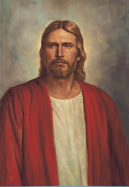
"Aren’t we something less than a friend if we have the gospel of Jesus Christ and are unwilling to share it by word and example with a family, a member, neighbor, or the stranger? Aren’t we something less than a friend if we have a testimony of the gospel of Jesus Christ and are unwilling to share it?" - Marvin J. Ashton
I belong to the Church of Jesus Christ of Latter-day Saints. I know who I am. I know God's plan. I'll follow him in faith. I believe in the Savior, Jesus Christ. I'll honor his name. I'll do what is right; I'll follow his light. His truth I will proclaim.
This is such a fun hymn to sing! Lots of movement. Fun to play on the piano, but much harder on the organ when you have to make it legato. Then you have the echoing tenor and bass on the third line--always love those. I have sung this song so many times, and knew we were singing about our desire for the Lord to come. Somehow I never put it together that it was singing about the Second Coming and Millennium. Last song of that in its section. Not sure why I never quite connected. But it is still wonderful!
Favorite lines:
*With healing in thy wings
*With songs of joy, a happier strain
*The wide expanse of heaven fill
*And ev'ry tongue sounds praise to thee
From the history book
Our wonderful Parley P. Pratt had this hymn published in 1840. They're not sure the story behind his writing it, but Brother George Pyper feels it was probably written amidst the trial in Missouri when the Saints would most especially be looking forward to the Savior coming again and taking way the pain, leaving behind joy and rejoicing. Even if not written during those trials, the memory of them likely remained freshly. The 1950 hymnal had the last two verses printed below the hymn and rarely sung, so they put them up with the other hymns to be sung more. Ironic that even then they knew about congregations' bad habit of not singing all verses, particularly ones printed below the music. Yet the current hymnal still has hymns printed that way and the verses are sadly neglected.
I think the first time I truly came to pay attention to this song was when Mom, my Seminary teacher for the Doctrine & Covenants/Church History year, asked me to play this for our opening hymn. 6/8? 3 flats? Unfamiliar rhythm? Yes, it stood out in memory quite well. Aside from its name doing so, and the rhyming being just slightly off because of word pronunciation. A couple of years later we college students sang this on the bus as we pulled out of Nauvoo on another Travel Study trip--this time one of our stops being Adam-ondi-Ahman itself. And then almost a decade later, my baby brother and his friends sang this as an a cappella quartet at their Seminary graduation. Over that 12 year span, I noticed this song more often. I have the tune memorized as well as various phrases from the first verse. Written by our Brother Phelps, it refers to the place where Adam dwelled, and talks of Enoch's Zion (as Brother Phelps did in Hymn #48), and looks forward to the glorious second coming when life on earth can be as it was in Adam-ondi-Ahman.
From the history book
The previous hymn's history had mentioned that the word Adam-ondi-Ahman was carried over from the pure Adamic language into English, one that we haven't been given a revealed, literal translation for--all this as defined by Bruce R. McConkie. Elder McConkie actually used all 4 verses of this hymn in his definition of it in Mormon Doctrine. He also went on to talk about the great spiritual gathering that occurred there 5,000 years ago where remnants of the altar that Adam offered sacrifice remained through the years; I have seen those remnants myself.
And he mentioned how in 1838 Joseph Smith and other brethren visited that place, called Spring Hill, and that the Prophet prophesied of the council that would take place again in preparation for Christ to reign personally on the earth (verse 4 of the hymn referencing that even though this hymn was written before the Prophet taught that on Spring Hill). The hymn inplies that the City of Enoch was in this spot as well. I don't know if there is any scriptural or revelatory evidence on that, but even if it wasn't in the same spot, the same thing of the people walking with God happened in the City of Enoch as it did when Adam dwelt there and walked with God.
This hymn was sung at the Kirtland Temple dedication in 1836, meaning 3 of Brother Phelps' hymns were sung there. And the book mentions the 3 slight changes to text compared to the original printing in the 1835 hymnal. One of them makes me laugh, because it took away one of Brother Phelps' attempts to make the rhyming work better. One was changing old to all. And the other was calling the hymn by its current title, rather than its first line as it had been in previous hymnals.
I always thought this was a fairly well--known hymn. But a few years ago I had a friend who seemed surprised to see it in our hymnal, thinking it was from some other Church-related event and not knowing it had been in the very first LDS hymnal written by the first Bishop of the Latter-day church). I was decently familiar with it. Then I remember in college the boy I had a crush on singing it as a duet at Ward Prayer. Kind of permanently stuck in my mind after that. ;-) I very much love the hymn, for its own sake and not my memory's.
The tune is joyous and excited--perfect for the words about the Gospel being restored and shared throughout the world, and especially praising our King, whose Gospel it is. The third verse sings of the Millennium, and the glorious experience we shall have to be there with our Savior. My favorite lines in the whole hymn are the last two:
A thousand years, oh, glorious day! Dear Lord, prepare my heart To stand with thee on Zion's mount And nevermore depart.
From the history book
There were originally 7 verses. First and second verses are the same; verses 3, 4, and 5 have been omitted because they focused mostly on the frightening events preceding the Second Coming. I am OK with that change. As much as it is good to know what those events will be, I don't really want to sing about them. Especially with such a joyous tune (which didn't actually get paired with this text until the current hymnal). The original 6th verse is not the 3rd and final verse in our hymn. But the original 7th continued with after the Millennium, fighting the adversary one more time before we spend eternity in the celestial world. Yes, I am very happy with the hymn as it is today and the German tune they picked for it.
Lyrics
1. Let Zion in her beauty rise;
Her light begins to shine.
Ere long her King will rend the skies,
Majestic and divine,
The gospel spreading thru the land,
A people to prepare
To meet the Lord and Enoch's band
Triumphant in the air.
2. Ye heralds, sound the golden trump
To earth's remotest bound.
Go spread the news from pole to pole
In all the nations round:
That Jesus in the clouds above,
With hosts of angels too,
Will soon appear, his Saints to save,
His enemies subdue.
3. That glorious rest will then commence
Which prophets did foretell,
When Saints will reign with Christ on earth,
And in his presence dwell
A thousand years, oh, glorious day!
Dear Lord, prepare my heart
To stand with thee on Zion's mount
And nevermore to part.
Text: Edward Partridge, 1793-1840. Included in the first LDS hymnbook, 1835.
This song is both ridiculously hard and absolutely delightful to play. And was almost impossible on the organ--thank heavens my teacher did not ask me to learn pedal on it.
NO.
WAY.
This is as far from the chord-chord-chord set up as you can get, including an incredible part for bass singers (quite rare). The tune goes perfectly with the text about arising and shining into a world of darkness, with nothing to fear in spite of trials and temptations because this is God's work and we are His people.
Favorite lines:
*Arise and shine in splendor Amid the world's deep night, For God thy sure defender, Is now they life and light.
*With the redeemed shall, singing, To Zion come again
*All of Verse 3, especially But patient, firm endurance, With glory in our view
*Oh, grant, Eternal Father, That we may faithful be
*To him be glory given Whose blood did us redeem
So much joy and hope and determination in the words. How can you not want to sing it exuberantly as the music indicates? It is so fun and beautiful, we'll even ignore the Utah reference in Verse 2. :-)
From the history book
This hymn was written 2 years after the Saints came to Utah. So, yes, the author was referring to Utah as Zion. The 1985 hymnbook committee decided to make this more applicable to all the Church, since Zion is worldwide. So they deleted 3 of the 4 verses that were "within the rows" in the 1950 hymnal and substituted 3 of the little-used "extra" verses printed below the hymn. Ah--those poor, unsung verses. See how amazing they can be? :-) The removed verses are really good, too, but definitely Utah-centric. Would be nice to be sung in a DUP meeting or some celebration of Utah history. Nothing said about the marvelous tune. :-( But it is by George Careless--who has written nine of our hymns' tunes.
A Pioneer hymn! Technically, so is Hymn #35. This is our small tiny pioneer section, with crossover in our tiny Utah/Mountains section. This is a fun one to sing--very upbeat and praising of our amazing forefathers in our early Church's history. I am a lover of that history, and have great admiration of the many, many stories of those who crossed their plains for freedom, unity, and the right to live their faith. Sometimes I hear of converts to the Church, with no Pioneer ancestry, say that their stories do not matter to them, since it isn't their family. But it is their church's heritage and matters just as much. It matters to every single member--and there are far more of those having no Pioneer ancestry than those of us few who do. This hymn helps to illustrate how: "Stepping stones for generations Were their deeds of ev'ry day. Building new and firm foundations." And then an example to us: "Service ever was their watchcry; Love became their guiding star; Courage.... Ev'ry day some burden lifted, Ev'ry day some heart to cheer, Ev'ry day some hope the brighter." And then that wonderful praise: "Honor, praise, and veneration.... List our song of adoration." Ah! I love it!!!
Personal history: I once named a college paper based on the title of this hymn. Not intentionally, I just loved the phrase and my paper title worked so well with it. My professor wrote "great title" by it. Glad he appreciated it. Only at BYU could I get away with that! :-)
From the history book
She mentioned the importance of our Pioneer ancestry as well, and how this hymn honors it. Yay--same page! :-) Recalls a message by President David O. MacKay when he asked the Saints to try to think what it was for those Saints to enter a desolate, desert valley--and see what they have created today! I will admit I love to drive up along the Wasatch Front at night and look down on all the lights. To see the trees and parks that they were able to grow in the valley. To see the homes and buildings that they began with. We are still booming in growth all over the state (particularly in my county and its neighbors)--and it truly is a marvel that their hard work built up not only this state, but the Gospel around the world, too.
This was another "Utah mountain" hymn. I remember singing it once growing up. I immediately liked the tune. I still do. The text is more about finding retreat from the persecutions and tribulation that the early Saints had to flee, and there in those mountains find rest to regain the strength after being so battered the previous 15 years. I like the relief and rest one can feel in the hymn, and the tribute to the beauty they found in their refuge.
But I have a little personal issue with this hymn because of a false notion it can support. When I came out to Utah for college, I encountered people (not all, but enough) who felt or at least acted like Utah and the LDS members who lived there were better than the LDS members who lived outside of it. How they referred to themselves as Zion, not remembering or realizing that Zion is the Pure in Heart. It is not a place, it is a state of mind and being--how we as Saints all over the world should be. Yet the chorus of this song unfortunately promotes the idea that Utah is Zion. If we want to be technical, the only physical place that can be called Zion is in Missouri.
It has always irked me, being a non-native Utah LDS member when the Utah LDS members put themselves above those of us not from there. And claim that they are Zion and the best place to be. That the rest of us are "the mission field." (The mandate to proclaim the Gospel is to all the world, not everywhere but Utah. By the way. Once upon a time there weren't missionaries in Utah, but now there are so can we stop calling the rest of us the mission field? Thank you.) I have come to love being a Utah transplant because of the many temples, being close to attend General Conference, having members in my workplace(!!), have members who are my neighbors, having Church meetings so close, being able to have Gospel discussions outside of my home on an easy, daily basis. But I do not think I am better or more blessed than others outside of Utah. I miss my East coast...everything. This is where the Lord wants me now, and I am grateful and find its joys and beauties. But it does not make this the chosen place anymore! It served its purpose in giving us strength and rejuvenation, and allowed us to move on and up.
Thus, I appreciate this hymn for many aspects, but it also tends to rub me the wrong way at times. Just gotta be honest on that!
From the history book
Who knew--the hymn was written by a man who hadn't seen Utah, yet. He was serving a mission in England. Had been there for ten years, each year being promised if he served another year then he would be released and get to go to Zion. Originally he sang it as a person who had never been to Zion, but later changed a little to fit with those Saints who had gathered to Utah. The tune was "Lily Dale" and even used in a 1939 movie set in the American West. The tune was originally published in 1852. Matching of tune and text first appeared in 1880. I think my favorite thing in the book is that she mentions this song in the figurative text. And in that, I love the song! Seeing the Gospel as a mountain refuge, I can totally get behind that. Then the Zion chorus doesn't bother me in the least.
Lyrics
1. O ye mountains high, where the clear blue sky
Arches over the vales of the free,
Where the pure breezes blow and the clear streamlets flow,
How I've longed to your bosom to flee!
O Zion! dear Zion! land of the free,
Now my own mountain home, unto thee I have come;
All my fond hopes are centered in thee.
2. Tho the great and the wise all thy beauties despise,
To the humble and pure thou art dear;
Tho the haughty may smile and the wicked revile,
Yet we love thy glad tidings to hear.
O Zion! dear Zion! home of the free,
Tho thou wert forced to fly to thy chambers on high,
Yet we'll share joy and sorrow with thee.
3. In thy mountain retreat, God will strengthen thy feet;
Without fear of thy foes thou shalt tread;
And their silver and gold, as the prophets have told,
Shall be brought to adorn thy fair head.
O Zion! dear Zion! home of the free,
Soon thy towers shall shine with a splendor divine,
And eternal thy glory shall be.
4. Here our voices we'll raise, and we'll sing to thy praise,
Sacred home of the prophets of God.
Thy deliv'rance is nigh; thy oppressors shall die;
And thy land shall be freedom's abode.
O Zion! dear Zion! land of the free,
In thy temples we'll bend; all thy rights we'll defend;
Another well-loved, often sung (at least in July!) hymn with Church History ties. I have heard the story of the writing of this hymn countless times, and yet I still love it. William Clayton was in one of the first groups to cross the Mississippi in the great exodus from Nauvoo. The first week of a frigid (remember--east coast humidity there!) February, William had to leave his very pregnant wife behind. A couple of months after leaving he received word that his wife had delivered and both she and the baby were fine. In the midst of great trial and suffering, he found joy. And if you know my blog, you know that is the theme of my life, so it is no wonder that I have a tender spot for the hymn that he wrote because of that joy in the midst of trial.
It fit so perfectly with what the Saints were just then embarking on--the long journey west. Yet every verse, except for the reference to the west in verse 3, applies perfectly for our personal journeys in life. This song took on greater meaning when my cousin Jordan died about 2 months before his 16th birthday. The weekend of his death, our ward choir was putting on our delayed Pioneer program. I didn't make it through Verse 4. Off and on it has been a difficult one to sing, most recently being last year when my aunt died around Pioneer Day. I stood in front of my ward congregation leading the song, unable to sing as I cried through the verse. With the deaths I have experienced in my life, this verse takes on the meaning not because of the loss I have felt, but because of the truth I can sing of that they "are free from toil and sorrow, too" and believe that "with the just [they] shall dwell."
For my own personal life, that verse is one to sing in the sense that "Thy will be done." "If I perish, I perish." But I would love to live some more days to experience more things in this life--have a chance to grow and learn and serve. So, if I am blessed with a few more days on this earth--how very grateful I will always be for the Lord giving them to me!
From the history book
There was already a hymn called "All is Well" that Clayton wrote new words to. Another Church history anecdote with this hymn was shared. I think there are many. This hymn has been in every LDS hymnal since 1851. I remember once practicing at another religion's church when I lived in West Virginia. Always intrigued by hymnals, I looked inside. And I found this hymn. So apparently it made its way to other hymnals, too!
Lyrics
1. Come, come, ye Saints, no toil nor labor fear;
But with joy wend your way.
Though hard to you this journey may appear,
Grace shall be as your day.
'Tis better far for us to strive
Our useless cares from us to drive;
Do this, and joy your hearts will swell--
All is well! All is well!
2. Why should we mourn or think our lot is hard?
'Tis not so; all is right.
Why should we think to earn a great reward
If we now shun the fight?
Gird up your loins; fresh courage take.
Our God will never us forsake;
And soon we'll have this tale to tell--
All is well! All is well!
3. We'll find the place which God for us prepared,
Far away in the West,
Where none shall come to hurt or make afraid;
There the Saints will be blessed.
We'll make the air with music ring,
Shout praises to our God and King;
Above the rest these words we'll tell--
All is well! All is well!
4. And should we die before our journey's through,
Another very well-beloved hymn today because of its beautiful lyrics which teach a wonderful lesson, its very singable tune which is quite far from the typical chord-chord-chord, and its tie to a significant event in our Church's history as this was the hymn Joseph Smith, Jr. asked John Taylor to sing while they were imprisoned in Carthage Jail, where only a few hours later Joseph would be killed by a mob. The first five verses tell different stories of how the singer provides service to someone in need. It is a toss up whether it could be read as the same poor wayfaring man in each verse, or several different men the singer is helping. At least until you get to the last few verses. The symbolism is, of course, to serve poor wayfaring person who come across our path whom we are able to help. In either case, the singer who is serving the wayfarer always finds themself very blessed and in unexpected ways because of the sacrifice given to offer these services. Then verse 6 and 7 are the concluding story, the most beautiful and uplifting to me when the singer offers the ultimate sacrifice of their own life if needed, and then the Savior reveals Himself to basically say "Well done thou good and faithful servant" because all of the service rendered to the wayfarer(s) was unto Him. So, so beautiful.
The hymn, being 7 verses long, (and 5 lines each verse!) is almost always shortened. In any performance or recording I have ever heard, all but 1 have shortened. "Understandable" in some cases because some in congregations who are not fans of singing get bored or tired (the latter being much more understandable to me than the first). Now, with those 5 verses being separate stories, it makes sense to leave out 1 or 2 or 3 and still convey the message of serving and how that service is rendered unto God, too. But many, especially in congregations, choose to leave off the last 4 and only sing the first 3. In doing that, they leave off the most beautiful, sweet part of the entire hymn!
So it would be more seemly to leave out verses in the middle. But, ahhh, leaving out! So painful to me. In that case it is like saying "Once upon a time there was a beautiful princess. And they lived happily ever after." Where is the middle? The fabulous part of the substance of the story or message. A wonderful, beautiful ending is great, but it lacks its poignancy and significance if what led up to it is taken away. Plus! Then you have to choose which of the wonderful verses to leave out.
Verse 1: Introducing the wayfarer(s) who often crosses the path--and how could we turn down offering them help?--Something in his eye that won my life; I knew not why
Verse 2: Sacrificing the need for food (basic, vital need)--I gave him all; he blessed it
Verse 3: Sacrificing the need for water (basic, vital need)--I ran and raised the suff'rer up
Verse 4: Sacrificing comfort to offer shelter and rest (another basic need--not necessarily the comfort part, though that helps a great deal in getting a proper rest, but in shelter when one has very little in that to offer as well)--To bid him welcome...and cheered my guest
Verse 5: Sacrificing one's own need of healing to heal another (which contains some of my favorite, more personal-connection lines "I had myself a wound concealed But from that hour forgot the smart, And peace bound up my broken heart"_
Verse 6: To see this simple person falsely accused and condemned, and stand up for them at cost of reputation and moreso at cost of life--The flesh was weak; my blood ran chill, But my free spirit cried, "I will!"
Verse 7: The Savior accepting all of our sacrifices and deeds--"Of me thou hast not been ashamed."
I think it is a shame that we do not sing all 7. And in all honesty, I have not picked this hymn yet in my time as music director because I don't want people to be grouchy because we sing all the verses of this amazing hymn.
From the history book
The poem was called "The Stranger" and first appeared in 1834 in an anthology of verse. I had always wondered if the author was LDS, because of the time when the Saints embraced the hymn and began to sing it. But it sounds as if he was not. Which is fine, as these words illustrated a New Testament scripture that is relevant to all of us. The book, of course, mentions the significance of the hymn because of our Church history ties. The composer was a reverend in New York, and our current tune is "a rather elaborate variation" of it.
Lyrics
1. A poor, wayfaring Man of grief
Hath often crossed me on my way,
Who sued so humbly for relief
That I could never answer nay.
I had not pow'r to ask his name,
Whereto he went, or whence he came;
Yet there was something in his eye
That won my love; I knew not why.
2. Once, when my scanty meal was spread,
He entered; not a word he spake,
Just perishing for want of bread.
I gave him all; he blessed it, brake,
And ate, but gave me part again.
Mine was an angel's portion then,
For while I fed with eager haste,
The crust was manna to my taste.
3. I spied him where a fountain burst
Clear from the rock; his strength was gone.
The heedless water mocked his thirst;
He heard it, saw it hurrying on.
I ran and raised the suff'rer up;
Thrice from the stream he drained my cup,
Dipped and returned it running o'er;
I drank and never thirsted more.
4. 'Twas night; the floods were out; it blew
A winter hurricane aloof.
I heard his voice abroad and flew
To bid him welcome to my roof.
I warmed and clothed and cheered my guest
And laid him on my couch to rest,
Then made the earth my bed and seemed
In Eden's garden while I dreamed.
5. Stript, wounded, beaten nigh to death,
I found him by the highway side.
I roused his pulse, brought back his breath,
Revived his spirit, and supplied
Wine, oil, refreshment--he was healed.
I had myself a wound concealed,
But from that hour forgot the smart,
And peace bound up my broken heart.
6. In pris'n I saw him next, condemned
To meet a traitor's doom at morn.
The tide of lying tongues I stemmed,
And honored him 'mid shame and scorn.
My friendship's utmost zeal to try,
He asked if I for him would die.
The flesh was weak; my blood ran chill,
But my free spirit cried, "I will!"
7. Then in a moment to my view
The stranger started from disguise.
The tokens in his hands I knew;
The Savior stood before mine eyes.
He spake, and my poor name he named,
"Of me thou hast not been ashamed.
These deeds shall thy memorial be;
Fear not, thou didst them unto me."
Text: James Montgomery, 1771-1854
Music: George Coles, 1792-1858, alt.
Hymn sung prior to the martyrdom of the Prophet Joseph Smith. See History of the Church, 6:614-15.
This is a well-known, well-loved, often-sung hymn among LDS members. The story of The First Vision full of its joy, promise, excitement--yet in its perfect simplicity. One of the most important events in the world's history, and it took place in an unassuming, quiet forest. Everything changed. Heavenly Father came with His Son, our Savior, to speak to a boy who wanted to know the truth. The heavens were opened again. The First Vision, as it came to be called, is a favorite event among many, including myself. So I love that this hymn is not only about that event, but basically tells the story of it. I love the tune as well. It fits perfectly with the text, though I did have the choir sing a version that was to the tune of "Come, Thou Fount" (a fabulous hymn no longer in our current hymnal) which was amazing as well.
My personal connection with this hymn--it was the first one I played on the piano from this hymnal. Up to that point, I had been teaching myself from two different books of simplified hymns. This was a huge part of my piano "career." I couldn't believe I had played an actual, non-simplified hymn! This was in 7th grade I think. Within a few years, I was able to play pretty much every hymn in this hymn book. The hymns of the Church were a major role/teacher in my learning to play the piano. So this song was not only one I loved to sing, and loved its message, but it was a milestone for me as well.
From the history book
George Manwaring wrote the text, though the first verse was different. And someone(s) at the Juvenile Instructor edited it, and in 1878 it first appeared in print. The first two lines of music are a tune by an American composer and was used in the 1889 hymnal. The last two lines were written by A.C. Smyth. The book also points out that the hymn has a strong base in the account Joseph Smith himself wrote about his experience.
Lyrics
1. Oh, how lovely was the morning!
Radiant beamed the sun above.
Bees were humming, sweet birds singing,
Music ringing thru the grove,
When within the shady woodland
Joseph sought the God of love,
When within the shady woodland
Joseph sought the God of love.
2. Humbly kneeling, sweet appealing--
'Twas the boy's first uttered prayer--
When the pow'rs of sin assailing
Filled his soul with deep despair;
But undaunted, still he trusted
In his Heav'nly Father's care;
But undaunted, still he trusted
In his Heav'nly Father's care.
3. Suddenly a light descended,
Brighter far than noonday sun,
And a shining, glorious pillar
O'er him fell, around him shone,
While appeared two heav'nly beings,
God the Father and the Son,
While appeared two heav'nly beings,
God the Father and the Son.
4. "Joseph, this is my Beloved;
Hear him!" Oh, how sweet the word!
Joseph's humble prayer was answered,
And he listened to the Lord.
Oh, what rapture filled his bosom,
For he saw the living God;
Oh, what rapture filled his bosom,
For he saw the living God.
Text: George Manwaring, 1854-1889
Music: Sylvanus Billings Pond, 1792-1871; adapted by A. C. Smyth, 1840-1909
This is a blog where I share inspirational/explanatory quotes, pieces of my testimony, and various things/events/experiences that have strengthened and will continue to increase that testimony. I am not officially called of my church to keep this blog. I share these things because they are the core of my very existence. And every part of me wants to proclaim it to all the world. So, I'll start here. I hope all who read my "spiritual ramblings" may know with a surety that I know and believe these things with all of my heart and with complete assurance.
If you have any questions, please feel free to contact me. I would love to talk more with readers, though I do reserve the right to not discuss or respond to anything inappropriate or that I am not comfortable with.