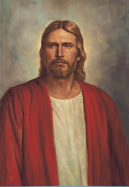
I belong to the Church of Jesus Christ of Latter-day Saints. I know who I am. I know God's plan. I'll follow him in faith. I believe in the Savior, Jesus Christ. I'll honor his name. I'll do what is right; I'll follow his light. His truth I will proclaim.

I Know that My Redeemer Lives!

I Know that My Redeemer Lives!

Tuesday, November 15, 2016

LDS Hymn #26


This is a well-known, well-loved, often-sung hymn among LDS members. The story of The First Vision full of its joy, promise, excitement--yet in its perfect simplicity. One of the most important events in the world's history, and it took place in an unassuming, quiet forest. Everything changed. Heavenly Father came with His Son, our Savior, to speak to a boy who wanted to know the truth. The heavens were opened again. The First Vision, as it came to be called, is a favorite event among many, including myself. So I love that this hymn is not only about that event, but basically tells the story of it. I love the tune as well. It fits perfectly with the text, though I did have the choir sing a version that was to the tune of "Come, Thou Fount" (a fabulous hymn no longer in our current hymnal) which was amazing as well.

My personal connection with this hymn--it was the first one I played on the piano from this hymnal. Up to that point, I had been teaching myself from two different books of simplified hymns. This was a huge part of my piano "career." I couldn't believe I had played an actual, non-simplified hymn! This was in 7th grade I think. Within a few years, I was able to play pretty much every hymn in this hymn book. The hymns of the Church were a major role/teacher in my learning to play the piano. So this song was not only one I loved to sing, and loved its message, but it was a milestone for me as well.

From the history book
George Manwaring wrote the text, though the first verse was different. And someone(s) at the Juvenile Instructor edited it, and in 1878 it first appeared in print. The first two lines of music are a tune by an American composer and was used in the 1889 hymnal. The last two lines were written by A.C. Smyth. The book also points out that the hymn has a strong base in the account Joseph Smith himself wrote about his experience.

Lyrics

  1. 1. Oh, how lovely was the morning!
    Radiant beamed the sun above.
    Bees were humming, sweet birds singing,
    Music ringing thru the grove,
    When within the shady woodland
    Joseph sought the God of love,
    When within the shady woodland
    Joseph sought the God of love.
  2. 2. Humbly kneeling, sweet appealing--
    'Twas the boy's first uttered prayer--
    When the pow'rs of sin assailing
    Filled his soul with deep despair;
    But undaunted, still he trusted
    In his Heav'nly Father's care;
    But undaunted, still he trusted
    In his Heav'nly Father's care.
  3. 3. Suddenly a light descended,
    Brighter far than noonday sun,
    And a shining, glorious pillar
    O'er him fell, around him shone,
    While appeared two heav'nly beings,
    God the Father and the Son,
    While appeared two heav'nly beings,
    God the Father and the Son.
  4. 4. "Joseph, this is my Beloved;
    Hear him!" Oh, how sweet the word!
    Joseph's humble prayer was answered,
    And he listened to the Lord.
    Oh, what rapture filled his bosom,
    For he saw the living God;
    Oh, what rapture filled his bosom,
    For he saw the living God.
  5. Text: George Manwaring, 1854-1889
    Music: Sylvanus Billings Pond, 1792-1871; adapted by A. C. Smyth, 1840-1909

Sunday, November 13, 2016

LDS Hymn #25


This is such a fun hymn to sing! The tune is upbeat and a little syncopated. Playing it is a bit of a challenge with that syncopation as well as so many accidentals. But that actually makes it kind of fun, too--once you get it! Written by the talented, "original LDS poet" William W. Phelps, this book has been around since our first LDS hymnal. This hymn is a little about prophets (when first written, very much about Joseph Smith, Jr. but first verse can still apply to the current living prophet), about the Restoration, the Priesthood, the Book of Mormon. Verse 2 and 3 are much more about the Prophet Joseph, and how he helped bring about the Restoration, restore the Priesthood, and translate the Book of Mormon. The fourth verse is all about "that to come." When Brother Phelps wrote the hymn, the Church was very much in its infancy. We are now almost 200 years later. We can see the joy of "that to come" happening now, with promises still to be fulfilled in our future. It is a very uplifting, exciting part of the hymn that all of that which was restored has so much joy and hope and promise for each of us.

From the history book
I like that it points out that Verse 2 ("Joseph he inspires") was present tense when the hymn was written and the early Saints first sang it. It is now in past tense, but can you imagine how wonderful it was to sing about Joseph and the work he was doing to help bring salvation to mankind when he was actually alive? If you notice something off in the rhyming scheme, it is because each verse was originally 2 shorter verses (8 short verses total) and Brother Phelps was using an AAAB for each verse.

Lyrics

  1. 1. Now we'll sing with one accord,
    For a prophet of the Lord,
    Bringing forth his precious word,
    Cheers the Saints as anciently.
    When the world in darkness lay,
    Lo! he sought the better way,
    And he heard the Savior say,
    "Go and prune my vineyard, son!"
  2. 2. And an angel surely then,
    For a blessing unto men,
    Brought the priesthood back again
    In its ancient purity.
    Even Joseph he inspired;
    Yea, his heart he truly fired
    With the light that he desired
    For the work of righteousness.
  3. 3. And the Book of Mormon true,
    With its cov'nant ever new,
    For the Gentile and the Jew,
    He translated sacredly.
    God's commandments to mankind,
    For believing Saints designed,
    And to bless the seeking mind,
    Came to him from Jesus Christ.
  4. 4. Precious are the years to come,
    While the righteous gather home
    For the great millennium,
    When they'll rest in blessedness.
    Prudent in this world of woes,
    They will triumph o'er their foes,
    While the realm of Zion grows
    Purer for eternity.
  5. Text: William W. Phelps, 1792-1872. Included in the first LDS hymnbook, 1835.
    Music: Joseph J. Daynes, 1851-1920

Saturday, November 12, 2016

LDS Hymn #24


This is a hymn I know I know, but if asked to hum the tune, couldn't do so without the music. Yet it is another good prophet song, with another prayer for our prophet. Included in that prayer is that others will hear his words, throughout the world, and that it will help us be united.

From the history book
The poem first appeared in 1855, but the words were a little altered since then. There was another verse, which was first, and which applied mostly to Utah Saints. To be more universal with the worldwide Church, they left that verse out (and thus had to change the tune title from "Our God, We Raise to Thee" to the current). Other changes were more for grammar or singability. The tune name is Ephraim, because the composer is from that town in Utah. The tune was submitted for the 1948 hymnal, but did not make it in. When matched with this text, it was then included in our current hymnal.

Lyrics

  1. 1. God bless our prophet dear;
    May health and comfort cheer
    His noble heart.
    His words with fire impress
    On souls that thou wilt bless
    To choose in righteousness
    The better part.
  2. 2. So shall thy kingdom spread,
    As by thy prophets said,
    From sea to sea.
    Truth burns in ev'ry soul;
    As one united whole,
    We hasten to the goal
    We long to see.
  3. 3. Oh, may thy Saints be one,
    Like Father and the Son,
    Nor disagree.
    United heart and hand,
    So may we ever stand,
    A firm and valiant band
    Eternally.
  4. Text: Bernard Snow, 1822-1894, alt.
    Music: Harry A. Dean, 1892-1987. (c) 1985 IRI

Friday, November 11, 2016

LDS Hymn #23


I really love this hymn. It is an easy melody. It is easy to play. And the message and sentiment goes straight to my heart as we sing of the things we pray for with our prophet. That he will be blessed with comfort, cheer, strength, and more as he fulfills such a weighty calling that affects the entire world. So much for one man. He would never be able to do all he has to in leading and guiding us on earth without the blessing and sustainment from Heavenly Father. And how much more helpful and sustaining it is for him when he knows how much we feel the sentiments in this hymn.

From the history book
Evan Stephens first wrote the words as a girls' trio celebrating Wilford Woodruff's 90th birthday. This would definitely explain "the advancing years" line! Though of course, that applies for most of our Latter-day prophets, which the book mentions. The tune was adapted from another. And succeeding hymnals kept it as a female trio. The 4-part arrangement came from Darwin Wolford for the Mormon Youth Chorus (ah--one of my never-to-be dreams). A choir in Fayette New York also joined in via satellite and sang it in General Conference on April 6, 1980--the sesquicentennial anniversary of the Church's organization.

Lyrics

  1. 1. We ever pray for thee, our prophet dear,
    That God will give to thee comfort and cheer;
    As the advancing years furrow thy brow,
    Still may the light within shine bright as now,
    Still may the light within shine bright as now.
  2. 2. We ever pray for thee with all our hearts,
    That strength be given thee to do thy part,
    To guide and counsel us from day to day,
    To shed a holy light around our way,
    To shed a holy light around our way.
  3. 3. We ever pray for thee with fervent love;
    And as the children's prayer is heard above,
    Thou shalt be ever blest, and God will give
    All that is meet and best while thou shalt live,
    All that is meet and best while thou shalt live.
  4. Text: Evan Stephens, 1854-1930
    Music: H. A. Tuckett, 1852-1918; adapted by Evan Stephens, 1854-1930

Thursday, November 10, 2016

LDS Hymn #22


I think the prophet songs have stood out to me ever since I learned that my dad wrote his own prophet hymn. Somehow growing up I guess I only paid attention to "We Thank Thee, O God, for a Prophet" as the prophet song--since it is what we always sang. But there are 4 more hymns specifically about prophets. (I think Dad also wrote that hymn because a living prophet was a big part of his conversion and testimony.)

This hymn is very simple in melody and one of the easier ones for me to play. I absolutely love the words, probably because I love having a living prophet. Technically, we have 15 of them. I love all of them, yet especially The Prophet--the only one with all the Priesthood keys and the authority to lead the world. I have a strong testimony that it is vital for us to listen, heed, and follow The Prophet's and the prophets' counsel, guidance, and warnings. The text of this hymn explains our responsibility of listening, heeding, and following, and a little bit of his role. It is a simple, sweet joy of one of the most important things in our Church--and what truly sets us apart from other religions today.

From the history book
Wow. I don't even know how to sum that up. What a wonderful history! MoTab director Jerold Ottley (my Mom's favorite) asked for an anthem to be based on "We Thank Thee, O God, for a Prophet." From that beginning eventually evolved this hymn, whose tune is named after Bruce Hafen, then President of then Ricks College, who supported the tune writer Darwin Wolford in obtaining a magnificent organ at that college. The original hymn (before the adaptation to the current tune we sing now) Ottley had requested was then performed at the dedication ceremony of the organ.

I also like how the author of the lyrics reminds us that when we sing with heart, mind, and voice, we are bearing our own testimony--adding it to that of the lyricists--and sending a prayer to God in that song.

Lyrics

  1. 1. We listen to a prophet's voice and hear the Savior too.
    With love he bids us do the work the Lord would have us do.
    The Savior calls his chosen seer to preach the word of God,
    That men might learn to find the path marked by the iron rod.
  2. 2. In ev'ry land, in ev'ry tongue, our prophet will be heard;
    How swiftly round the world his voice reveals the gospel word!
    The sacred message that he brings will witness and agree
    With ev'ry prophet called of God throughout earth's history.
  3. 3. Hosanna! Let our praise ascend unto the Savior's throne;
    Rejoice! The prophet has confirmed that by Him we are known.
    Attend, ye earth! The prophet speaks; come listen and obey.
    He is the man who holds the keys of priesthood pow'r today.
  4. Text: Marylou Cunningham Leavitt, b. 1928. (c) 1985 IRI
    Music: Darwin K. Wolford, b. 1936. (c) 1985 IRI


Tuesday, November 8, 2016

LDS Hymn #21


(Sorry it has been a while! A couple of late nights and then a couple of days with no internet.)


I love this song. The tune is wonderful. It is fun to sing. Bright and joyful and hopeful, which works really well conveying feelings one should have because we have a living prophet today. The hymn also talks of how we need a living prophet, and reminds us how a prophet today leads and warns the same was the ancient prophets did.

From the history book
OK, I am too lazy (and in pain) to go grab the book from the other room. But my memory tells me that the 4th verse was written by Bruce R. McConkie because he wanted to give an admonition for us to follow. Since the previous 2 verses are a bit more about the Restoration, the 4th ties in with the 1st verse asking you to come listen. (I could be making that reason up....) When I had read that a different composer wrote the 4th verse, I decided to do a little arrangement for the YSA branch choir I was director of a few years ago. We sang the first 3 verses as the hymnal had them, then we did the 4th verse to the tune of "As Zion's Youth in Latter Days" (Hymn #??) I liked the outcome. Not sure what others' thought, but it has made the hymn stand out to me ever since.


Lyrics

  1. 1. Come, listen to a prophet's voice,
    And hear the word of God,
    And in the way of truth rejoice,
    And sing for joy aloud.
    We've found the way the prophets went
    Who lived in days of yore.
    Another prophet now is sent
    This knowledge to restore.
  2. 2. The gloom of sullen darkness spread
    Thru earth's extended space
    Is banished by our living Head,
    And God has shown his face.
    Thru erring schemes in days now past
    The world has gone astray;
    Yet Saints of God have found at last
    The straight and narrow way.
  3. 3. 'Tis not in man they put their trust
    Nor on his arm rely.
    Full well assured, all are accursed
    Who Jesus Christ deny.
    The Savior to his people saith,
    "Let all my words obey,
    And signs shall follow living faith,
    Down to the latest day."
  4. 4. Then heed the words of truth and light
    That flow from fountains pure.
    Yea, keep His law with all thy might
    Till thine election's sure,
    Till thou shalt hear the holy voice
    Assure eternal reign,
    While joy and cheer attend thy choice,
    As one who shall obtain.
  5. Text: Joseph S. Murdock, 1822-1899. Verse four, Bruce R. McConkie, 1915-1985. (c) 1985 IRI
    Music: Joseph J. Daynes, 1851-1920

Wednesday, November 2, 2016

LDS Hymn #20


This is a hymn that I am 50-50 familiar with. I don't know the words by memory. I can probably hum about 50% of it correctly. Yet it isn't one that I have no idea about. It's a short one--have to be familiar with those to fit in when we do long hymns. Ah, spoken like a Ward Music Director. :-)

The hymn is not sung a lot, that I remember from my lifetime. Yet it isn't completely unknown. Does that explain the 50-50 description? It may apply to quite a few hymns in the book for me. Others would say, "I've never heard this hymn!" And they could be right, though I hear them say that about hymns that I know were sung in Conference in the previous few years.... Ah, the tonal memory of a Music Lover.

I love that this song is a plea to Heavenly Father to help us grow. It is our purpose on earth--to grow and become like Him. I love
"Forge our souls in living fire; Shape them to they great desire."

For if we are to change, it will not be easy. We will have to go through fire (trials and tribulations) so we are malleable and able to be shaped the way He has in mind for us. The way He knows will be best for us.

I also like
"Take us in our eager youth; Lift us step by step to thee"

For we our spirits are young, no matter what are earthly age may be. And I know for me, I am eager to learn all that Heavenly Father can offer. Eager to grow. And I need Him to help me one step at a time in that.

Verse 3 is all pretty awesome, too. I really like it when we refer to God as merciful, for so many choose to see the side where he has to execute justice. He cannot be God if He does not follow through on what He said He would. And yet over and over He extends His arm of mercy. That is what I see the most, and I will cherish it.


From the history book
The author stated "I am not prepared to go so far as to say this was inspiration [writing the text in an hour], but certainly the hymn almost wrote itself, and I didn't struggle over it as I have done over many of the other things I have written." Brother Bennett wrote it because with the 1948/1950 hymnal, the committee noticed there weren't very many hymns especially suitable for Priesthood meetings. The head of the committee wrote the music, and the tune name Elsie is for his first wife. Each year near his birthday, Brother Bennett's SLC ward would sing this hymn in his honor. :-)

Lyrics

  1. 1. God of power, God of right,
    Guide us with thy priesthood's might.
    Forge our souls in living fire;
    Shape them to thy great desire.
  2. 2. God of wisdom, God of truth,
    Take us in our eager youth;
    Lift us step by step to thee
    Thru an endless ministry.
  3. 3. God of mercy, God of love,
    Let thy Spirit, like the dove,
    Touch and humble, teach and bless,
    As we serve in holiness.
  4. Text: Wallace F. Bennett, 1898-1993. (c) 1948 IRI
    Music: Tracy Y. Cannon, 1879-1961. (c) 1948 IRI