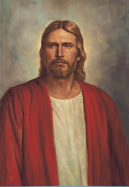
I belong to the Church of Jesus Christ of Latter-day Saints. I know who I am. I know God's plan. I'll follow him in faith. I believe in the Savior, Jesus Christ. I'll honor his name. I'll do what is right; I'll follow his light. His truth I will proclaim.

I Know that My Redeemer Lives!

I Know that My Redeemer Lives!

Sunday, June 7, 2015

Gospel Message Day 256

Prophets of God, Part 2

While looking up the definition of prophet, I found two fabulous items:

The first was a brief blurb of why we need prophets:

Members of the Church across the world bear testimony of living prophets and apostles and speak of the blessings of peace and hope that arise from that knowledge. In the accompanying video, Church members re-tell experiences in which their faith in prophets was strengthened and then bear witness of the reality of modern-day prophets and apostles.

“Because Heavenly Father loves His children, He has not left them to walk through this mortal life without direction and guidance,” President Dieter F. Uchtdorf said. “That is why He pleads so earnestly with us through His prophets. Just as we want what is best for our loved ones, Heavenly Father wants what is best for us.”

Prophets and apostles who speak today represent and carry out the Lord’s will as they lead His children in this dispensation. President Uchtdorf said, “Our fate and the fate of our world hinge on our hearing and heeding the revealed word of God to His children.” President Uchtdorf made his comments in the First Presidency Message published in Church magazines and in many languages throughout the world during March 2012.

I also found a wonderful part of the lds.org website has easy access to
*bios of our current prophets
*news about what they are doing
*how they are serving
*what they are saying

I highly recommend going to this site if you are wondering what these men are doing as part of their duty to witness of Christ and give a voice of warning. History shows that often people want to be comfortable in doing what they want to and not what they ought to, and they aren't generally happy to hear about what they are doing wrong or what the consequences will be if they don't fix those actions. Those trying to live right come to love these prophets dearly, as manifested by the sorrow we are feeling at losing such a great man and servant of God in L. Tom Perry. We look forward to the Lord calling a new apostle and prophet, but we will miss whom we have had.

Those who are comfortable living contrary to the Lord's commandments aren't generally pleased to hear the prophets speak against their actions. This is throughout history, too. In scripture we read how they were scorned, spit upon, mocked, and some stoned and killed. It is not a new thing for people to scorn and yell and rage. It is still being done today. It saddens the hearts of those trying to live righteously, but with the Lord on our side as well as the prophets, we have nothing to fear no matter what the consequences of the others' actions may be. I still feel sorrow for the martyrdom of our Prophet Joseph Smith so many years ago. But like Stephen in the New Testament, his work was done on this earth and he went on to a better, happier, more peaceful existence with his Father and his Brother.

Saturday, June 6, 2015

Gospel Message Day 255

Prophets of God

Very fitting to have this topic, considering the recent loss of our dear Elder L. Tom Perry. 

The LDS Bible Dictionary definition of a prophet states:

The work of a Hebrew prophet was to act as God’s messenger and make known God’s will. The message was usually prefaced with the words “Thus saith Jehovah.” He taught men about God’s character, showing the full meaning of His dealings with Israel in the past. It was therefore part of the prophetic office to preserve and edit the records of the nation’s history; and such historical books as Joshua, Judges, 1 and 2 Samuel, 1 and 2 Kings were known by the Jews as the former Prophets. It was also the prophet’s duty to denounce sin and foretell its punishment and to redress, so far as he could, both public and private wrongs. He was to be, above all, a preacher of righteousness. When the people had fallen away from a true faith in Jehovah, the prophets had to try to restore that faith and remove false views about the character of God and the nature of the divine requirement. In certain cases prophets predicted future events, such as the very important prophecies announcing the coming of Messiah’s kingdom; but as a rule a prophet was a forthteller rather than a foreteller. In a general sense a prophet is anyone who has a testimony of Jesus Christ by the Holy Ghost, as in Num. 11:25–29; Rev. 19:10.

We have 15 prophets on this Earth today: all 3 members of the First Presidency plus the 12 members of the Quorum of the Twelve Apostles. All the men have the authority and duty to warn us, and to make known God's will. What may confuse people but should be clarified for all is that we believe only one man has the authority to be THE Prophet. The difference between prophet with a lower case letter and Prophet with upper case is that the upper case Prophet is the also the President of the Church of Jesus Christ of Latter-day Saints, the highest authority on Earth (Christ being the highest in the Church). 

However, these 15 men are not just prophets to the Church; they are prophets to the world.

Friday, June 5, 2015

Gospel Message Day 254

Sabbath Day, Part 4

The most important part of the Sabbath is the Sacrament ordinance, which we take as part of one of our 3 meetings. When Christ visited the ancient inhabitants of the American continent, he instituted the Sacrament (3 Nephi 18):
And it came to pass that Jesus commanded his disciples that they should bring forth some bread and wine unto him.
 And while they were gone for bread and wine, he commanded the multitude that they should sit themselves down upon the earth.
 And when the disciples had come with bread and wine, he took of the bread and brake and blessed it; and he gave unto the disciples and commanded that they should eat.
 And when they had eaten and were filled, he commanded that they should give unto the multitude.
 And when the multitude had eaten and were filled, he said unto the disciples: Behold there shall one be ordained among you, and to him will I give power that he shall break bread and bless it and give it unto the people of my church, unto all those who shall believe and be baptized in my name.
 And this shall ye always observe to do, even as I have done, even as I have broken bread and blessed it and given it unto you.
 And this shall ye do in remembrance of my body, which I have shown unto you. And it shall be a testimony unto the Father that ye do always remember me. And if ye do always remember me ye shall have my Spirit to be with you.
 And it came to pass that when he said these words, he commanded his disciples that they should take of the wine of the cup and drink of it, and that they should also give unto the multitude that they might drink of it.
 And it came to pass that they did so, and did drink of it and were filled; and they gave unto the multitude, and they did drink, and they were filled.
 10 And when the disciples had done this, Jesus said unto them: Blessed are ye for this thing which ye have done, for this is fulfilling my commandments, and this doth witness unto the Father that ye are willing to do that which I have commanded you.
 11 And this shall ye always do to those who repent and are baptized in my name; and ye shall do it in remembrance of my blood, which I have shed for you, that ye may witness unto the Father that ye do always remember me. And if ye do always remember me ye shall have my Spirit to be with you.
 12 And I give unto you a commandment that ye shall do these things. And if ye shall always do these things blessed are ye, for ye are built upon my rock.
And Christ also admonished them to "meet together oft:" 

And behold, ye shall meet together oft; and ye shall not forbid any man from coming unto you when ye shall meet together, but suffer them that they may come unto you and forbid them not;
 23 But ye shall pray for them, and shall not cast them out; and if it so be that they come unto you oft ye shall pray for them unto the Father, in my name.
Moroni quoted his father Mormon (Moroni 6) about Sabbath observance as well: 
And the church did meet together oft, to fast and to pray, and to speak one with another concerning the welfare of their souls.
 And they did meet together oft to partake of bread and wine, in remembrance of the Lord Jesus. 
"Concerning the welfare of their souls"--I love that! This is my favorite part of the Sabbath: getting to be with my Church family to learn more about Christ and His Gospel while having the opportunity to renew my covenants. It is something I look forward to each week, and truly is something to help me rest from my other labors.

Thursday, June 4, 2015

Gospel Message Day 253

Sabbath, Part 3

Today I will talk about some of the activities I choose to do (or not do) on the Sabbath. One's Sabbath activities are very, very personal--and differ from one person to the next. I wish while growing up and in my earlier college years I had Elder Nelson's quote about our conduct and attitude being our own personal sign between ourselves and Heavenly Father. I was more judgmental than I like to admit, but often because I just could not understand why some people chose to do certain things on the Sabbath. They were so different from what I had been raised. I knew we were not taught in the Church specific things to do. But we were given suggestions and, of course, had our agency in what to do. What I didn't realize then but do now is that our Sabbath actions are a personal choice which are ways that allow us to show our Savior our commitment to and respect for Him and His holy day. So there should be no judgement on our part, because these actions are between a person and the Savior.

As I've grown older, I've considered various actions on if they are things that can bring my closer to my Heavenly Father and to my Redeemer Jesus Christ. Some things are a permanent action, like going to Church, and partaking of the Sacrament (or to Conference if it happens to be one of those Sundays). Some times I attend Firesides where I learn more about the Savior and His Gospel and how I can better live it. When "in season," I attend my choir rehearsals (which is one of my favorite ways to spend the Sabbath--singing about my Savior). I visit friends and family. I visit with the sisters I have been asked to help and be their friend. I like to do my Family History if I can find the time.

I loved watching Church videos when I was growing up. I have a very tiny collection now compared to what our family had, but I still enjoy watching what I own. When I was older, I added some period dramas (like Austen movies) to the mix, because they are a calming influence. They are enjoyable to watch with others. They are great studies of human nature and behavior (yeah, I know, I'm a nerd). I often am crocheting or doing something else while the movie is on in the background. It is a break from the regular routine of my week. When I choose a movie for my Sabbath, I personally evaluate how it will make me feel and think on that holy day. In that choice, it is as I said before a personal thing, and my own way to show my Savior how I regard Him and His day. In my own personal standards, I feel like I stumble occasionally in this area, and perhaps in other actions I've chosen to do on this day. But every Sabbath I try to make my actions consistent with what I feel would be full of the most respect and love for my Redeemer.

Wednesday, June 3, 2015

Gospel Message Day 252

Sabbath Day, Part 2

So, it might seem weird, but going off of Elder Nelson's quote I shared yesterday, I wanted to go in to a couple of areas in Sabbath observance, detailing what I do. I don't do it to judge anyone, or to say that what I'm doing is better or worse. Since I only know myself and how my choices reflect my personal desire of keeping my covenant of the Sabbath with my Savior, I am only able to share how and why I choose to observe my Sabbath.

Today, I thought I would talk about how I dress, since I've often been ridiculed for it. In my family, we grew up wearing our Sunday best all day Sunday. It wasn't just for church. After all, it was Sunday best, not church best. A couple of times on long, family vacations we would drive on Sunday, listening to Sunday music and spending that time on the road being together. We were allowed to wear non-Sunday clothes at those times. But even as a child/teen, I never felt comfortable doing that. I felt I was being too lax and not respecting my Lord's day. That there wasn't a clear differentiation. I can wear casual clothes 6 days of the week. On His day, I want to dress up a little nicer, acknowledging that day truly is different from the other days.

Because of this personal feeling, I decided to wear my Sunday best all day whenever possible, and not just because my parents expected it of me while living in their home. I got to test this on my first little stint away from home. I was on a performing tour in Europe for a month right after I graduated high school. I was away 4 Sundays. My parents would never know what I wore. And the people I was with would never care. But I did. On a performing tour, I was at the mercy of our schedule. Practices, performances, traveling, brief hours of sight-seeing. It was hard to differentiate one day from another, especially when I did not have allotted time (or the knowledge of where) to go to attend my church services. Putting on Sunday dress helped to remind me whose day it was, and how I should conduct myself as best I could in the circumstances. That experience sealed my testimony of one way that I could best keep in mind the Sabbath and help me do things to honor and observe the Sabbath.

So, I've been ridiculed for wearing Sunday clothes all Sunday. But I've also been ridiculed for the kind of Sunday clothes. They think I'm too dressed up. My dresses (and yes, I wear dresses to church; very rarely do I wear a skirt--they feel too casual) look a lot dressier than what most (younger) women tend to wear to church these days. But one has to see where I'm coming from to know why I wear these. I have always loved wearing dresses. From 1st grade - 3rd (and maybe including Kindergarten), I wore a dress to school almost every day. I was not a fan of pants. I felt more comfortable in a dress than in pants--I still do. The only reason I switched over to pants from 4th-6th grade was peer pressure. New state, new school, new people. I wanted to be accepted and not to stand out than I was already going to. The joy I felt when I saw skirts become "in" by 7th grade. One of the best Christmas presents ever: my sister gave me my first long, straight skirt. I still have it; I still wear it. Over a very slow time, dresses creeped back in to my non-Sunday wardrobe. They've almost overtaken it now, mostly because finances won't allow me to purchase non-dress stuff. But I don't mind so much not having them right now.

How I love skirts and dresses. I prefer to wear them when I drive--much more comfortable for me. I love to wear them to work. I like to curl up and read in them. I especially love them when I have my many stomach illnesses. They have not hindered me from much, either. I once did a lower body workout in a skirt because I didn't have time to change amongst the 3 activities I had going on. I played Ultimate in a dress. I hadn't planned to play, but I couldn't pass up my favorite sport.

The only time a dress hinders me is if I worry about keeping it clean and in good shape, I want to protect my legs a bit more, or if I don't want anything embarrassing to happen/show/occur in front of the menfolk. So for a girl who wears dresses QUITE a lot, I feel there should be a distinction between my every day dresses, and my Sunday dresses. So, yes, the dresses I wear on Sunday are a lot nicer than what I wear during the week. For what I have chosen to wear on Sunday makes me feel at my best, and that is what I want to offer my Lord on His day.


Tuesday, June 2, 2015

Gospel Message Day 251

Sabbath Day

Though the topic of the Atonement is unfathomable, I think I've expounded enough for now. It's a guarantee that I will talk of it more on this blog in the future.
I like this new topic, especially as a few days ago I read Elder Nelson's recent Conference talk about the Sabbath. In my first (so far) reading of it, these were the take-aways:

*"the Sabbath was given as a perpetual covenant, a constant reminder that the Lord may sanctify His people."

*"my conduct and my attitude on the Sabbath constituted a sign between me and my Heavenly Father"

*When I had to make a decision whether or not an activity was appropriate for the Sabbath, I simply asked myself, 'What sign do I want to give to God?' That question made my choices about the Sabbath day crystal clear.

*"The fulness of the earth is promised to those who keep the Sabbath day holy"

*"give highest priority to family prayer, family home evening, gospel study and instruction, and wholesome family activities."

*"No other work transcends that of righteous, intentional parenting!"

*"Such study of the gospel makes the Sabbath a delight. This promise pertains regardless of family size, composition, or location."

*"If you choose to delight yourself in the Lord, you will not permit yourself to treat it as any other day. Routine and recreational activities can be done some other time."

My favorite of those is when he suggests asking one's self what sign we want to give God when deciding on what activities we do on the Sabbath. I think that is the perfect way for one to account for their own actions and not have to be commanded in all things. And it makes sense that we are not told exactly what our actions should be, for we are to have our agency--especially when it concerns our dedication to our Heavenly Father.

Monday, June 1, 2015

Gospel Message Day 250

Atonement - Enabling Power, Part 6

Today's Conference talk also fit in with the current topic. I read Elder Sitati's "Be Fruitful, Multiply, and Subdue the Earth." This quote near the end went perfectly with our 5th Sunday combined meeting's lesson yesterday:

"Faithful Latter-day Saints who understand their divine potential and rely wholeheartedly on the power available through the Atonement of the Lord Jesus Christ are strengthened in their natural weakness and “can do all things.”18 They are enabled to overcome the enticings of evil that have put many under bondage to the adversary."

Yesterday's lesson included a young man who had been addicted to drugs and alcohol, and how he had used the Church's addiction recovery program to help him in fixing his life. He and his mother both spoke to us. They talked of how the 12-step program is all about the Atonement, and learning how to use the Atonement in helping them with their illness (for by the time they are addicted, their brain has actually changed and they now have a disease that they will never be cured from, but which can go in to remission).

Compared to what some people have to go through, the ways that I have been enabled by the Atonement's power are rather paltry. However, we are not to compare. My trials have been hard for me. Each of us has our specific trials tailored to what the Lord knows we can handle, what will help us grow in the best ways for us, and that the Lord's Atonement can empower to get us through those trials.

I have been enabled to pass through trials that I could not handle on my own (which, really, would be all of them). However, I think in cases like this brother (and his family which was affected), the enabling power is much more prevalent, and obvious. He will forever suffer from this disease of addiction for the rest of his life. To keep it in remission, he has to have help. He could not get over it on his own. He cannot keep it at bay without help. The only true, effective, lasting help comes from the Atonement, and only when he chooses to use it in his life. We must all daily choose to to use the Atonement's power, to enable us to reach our divine potential.