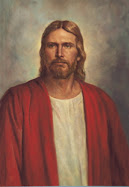
"Aren’t we something less than a friend if we have the gospel of Jesus Christ and are unwilling to share it by word and example with a family, a member, neighbor, or the stranger? Aren’t we something less than a friend if we have a testimony of the gospel of Jesus Christ and are unwilling to share it?" - Marvin J. Ashton
I belong to the Church of Jesus Christ of Latter-day Saints. I know who I am. I know God's plan. I'll follow him in faith. I believe in the Savior, Jesus Christ. I'll honor his name. I'll do what is right; I'll follow his light. His truth I will proclaim.
Definitely a hymn I did not know until recently. About 2 years ago, I asked my ward choir for songs they would like to try to sing. One of my loyal tenors mentioned this one, as it is his favorite hymn. So we did a simple arrangement of it a few months later. In that time or shortly after, I suggested it be one of the ones I try on the organ (before she was insisting that everything I try to do with the pedal). Thus I got to know the tune very well, and the lyrics a bit. The tune moves and is full of accidentals. Helps to stand out in one's mind. The lyrics are a bit more "old-fashioned." Written in the 1800s, they have that Victorian-esque flair. Which means it takes my mind a bit more effort to break it down and understand its meaning. But overall I get it as a rejoicing hymn--declaring to all (particularly the sons of Michael, whom I assume that means Priesthood holders???) that the Savior is coming and to be prepared for the gloriousness that will accompany and the humility and rejoicing we will/should be filled with because of this great, longed-for event.
Favorite lines:
*Raise aloft your voices millions In a torrent pow'r of song.
*Hail our head with music soft! Raise sweet melodies aloft!
From the history book
I knew that Michael referred to Adam. The book says that "sons of Michael" refer to all human beings, since we are all his descendants. Verse 3's Mother refers to Eve, showing that she is at Adam or Michael's side in this. The hymn is also referring to the grand council that Joseph Smith prophesied about, referencing Daniel 7. So what I majorly missed in the text is that the hymn is very much about Michael and Eve. We are singing about the grand council that Michael will preside at. The 1985 hymnal wanted to distinguish that, so they went with the (now mostly used) format of capitalizing the words when referring to Deity and leaving them lowercase when referring to Michael (Father vs father).
The hymn was first published in 1861 and part of the 1950 hymnal. Its original tune was apparently so hard that only choirs could attempt it. (Their choirs must have been magnificently skilled in music back then!) So Brother Wolford wrote a more singable tune, which actually helped him come to love the text which he didn't beforehand. He said that the hymn sounds wonderful in unison, but as an organist "wrote a setting that has a melodic bass line--one that feels good to the feet!" And those bass rarely ever get such fun parts to sing. So by all means, let them sing it!
I think the first time I truly came to pay attention to this song was when Mom, my Seminary teacher for the Doctrine & Covenants/Church History year, asked me to play this for our opening hymn. 6/8? 3 flats? Unfamiliar rhythm? Yes, it stood out in memory quite well. Aside from its name doing so, and the rhyming being just slightly off because of word pronunciation. A couple of years later we college students sang this on the bus as we pulled out of Nauvoo on another Travel Study trip--this time one of our stops being Adam-ondi-Ahman itself. And then almost a decade later, my baby brother and his friends sang this as an a cappella quartet at their Seminary graduation. Over that 12 year span, I noticed this song more often. I have the tune memorized as well as various phrases from the first verse. Written by our Brother Phelps, it refers to the place where Adam dwelled, and talks of Enoch's Zion (as Brother Phelps did in Hymn #48), and looks forward to the glorious second coming when life on earth can be as it was in Adam-ondi-Ahman.
From the history book
The previous hymn's history had mentioned that the word Adam-ondi-Ahman was carried over from the pure Adamic language into English, one that we haven't been given a revealed, literal translation for--all this as defined by Bruce R. McConkie. Elder McConkie actually used all 4 verses of this hymn in his definition of it in Mormon Doctrine. He also went on to talk about the great spiritual gathering that occurred there 5,000 years ago where remnants of the altar that Adam offered sacrifice remained through the years; I have seen those remnants myself.
And he mentioned how in 1838 Joseph Smith and other brethren visited that place, called Spring Hill, and that the Prophet prophesied of the council that would take place again in preparation for Christ to reign personally on the earth (verse 4 of the hymn referencing that even though this hymn was written before the Prophet taught that on Spring Hill). The hymn inplies that the City of Enoch was in this spot as well. I don't know if there is any scriptural or revelatory evidence on that, but even if it wasn't in the same spot, the same thing of the people walking with God happened in the City of Enoch as it did when Adam dwelt there and walked with God.
This hymn was sung at the Kirtland Temple dedication in 1836, meaning 3 of Brother Phelps' hymns were sung there. And the book mentions the 3 slight changes to text compared to the original printing in the 1835 hymnal. One of them makes me laugh, because it took away one of Brother Phelps' attempts to make the rhyming work better. One was changing old to all. And the other was calling the hymn by its current title, rather than its first line as it had been in previous hymnals.
Like the previous hymn this is one that I'm not sure how I am familiar with it, but I am. It's a fairly easy one to play on the piano, except for the two sharps. :-) Actually, two sharps really isn't that bad. This does have the slightest bit of a Utah reference ("stands will hills surrounded"), though one really should choose to see the symbolic part of being surrounded by an Almighty fortress that confounds our foes no matter how awful things could get (friends leaving, mothers abandoning). Which leads to that beautiful line "But no changes Can attend Jehovah's love." Brings to mind the time when Joseph was in Liberty Jail and the Lord tells him that though it seems all have left him, he isn't because the Savior is always there. Verse 3--marvelous!! The best part of the entire song. It is one that could go with a different, slower tune to really draw out its meaning. Looking at the hymn meters, I think Hymn #96 (Dearest Children, God is Near You) would do that. I may have to consider this for the choir!
From the history book
And, like the previous hymn, this was written by a man who likely never heard of the LDS Church in his lifetime. I need to stop being so quick to assume Utah references. ;-) He used scripture references of being protected by surrounding hills, yet was still a bit prophetic that the early Saints literally found that protection. The tune was first combined with the text in a hymnal published in 1883.
Another very well-beloved hymn today because of its beautiful lyrics which teach a wonderful lesson, its very singable tune which is quite far from the typical chord-chord-chord, and its tie to a significant event in our Church's history as this was the hymn Joseph Smith, Jr. asked John Taylor to sing while they were imprisoned in Carthage Jail, where only a few hours later Joseph would be killed by a mob. The first five verses tell different stories of how the singer provides service to someone in need. It is a toss up whether it could be read as the same poor wayfaring man in each verse, or several different men the singer is helping. At least until you get to the last few verses. The symbolism is, of course, to serve poor wayfaring person who come across our path whom we are able to help. In either case, the singer who is serving the wayfarer always finds themself very blessed and in unexpected ways because of the sacrifice given to offer these services. Then verse 6 and 7 are the concluding story, the most beautiful and uplifting to me when the singer offers the ultimate sacrifice of their own life if needed, and then the Savior reveals Himself to basically say "Well done thou good and faithful servant" because all of the service rendered to the wayfarer(s) was unto Him. So, so beautiful.
The hymn, being 7 verses long, (and 5 lines each verse!) is almost always shortened. In any performance or recording I have ever heard, all but 1 have shortened. "Understandable" in some cases because some in congregations who are not fans of singing get bored or tired (the latter being much more understandable to me than the first). Now, with those 5 verses being separate stories, it makes sense to leave out 1 or 2 or 3 and still convey the message of serving and how that service is rendered unto God, too. But many, especially in congregations, choose to leave off the last 4 and only sing the first 3. In doing that, they leave off the most beautiful, sweet part of the entire hymn!
So it would be more seemly to leave out verses in the middle. But, ahhh, leaving out! So painful to me. In that case it is like saying "Once upon a time there was a beautiful princess. And they lived happily ever after." Where is the middle? The fabulous part of the substance of the story or message. A wonderful, beautiful ending is great, but it lacks its poignancy and significance if what led up to it is taken away. Plus! Then you have to choose which of the wonderful verses to leave out.
Verse 1: Introducing the wayfarer(s) who often crosses the path--and how could we turn down offering them help?--Something in his eye that won my life; I knew not why
Verse 2: Sacrificing the need for food (basic, vital need)--I gave him all; he blessed it
Verse 3: Sacrificing the need for water (basic, vital need)--I ran and raised the suff'rer up
Verse 4: Sacrificing comfort to offer shelter and rest (another basic need--not necessarily the comfort part, though that helps a great deal in getting a proper rest, but in shelter when one has very little in that to offer as well)--To bid him welcome...and cheered my guest
Verse 5: Sacrificing one's own need of healing to heal another (which contains some of my favorite, more personal-connection lines "I had myself a wound concealed But from that hour forgot the smart, And peace bound up my broken heart"_
Verse 6: To see this simple person falsely accused and condemned, and stand up for them at cost of reputation and moreso at cost of life--The flesh was weak; my blood ran chill, But my free spirit cried, "I will!"
Verse 7: The Savior accepting all of our sacrifices and deeds--"Of me thou hast not been ashamed."
I think it is a shame that we do not sing all 7. And in all honesty, I have not picked this hymn yet in my time as music director because I don't want people to be grouchy because we sing all the verses of this amazing hymn.
From the history book
The poem was called "The Stranger" and first appeared in 1834 in an anthology of verse. I had always wondered if the author was LDS, because of the time when the Saints embraced the hymn and began to sing it. But it sounds as if he was not. Which is fine, as these words illustrated a New Testament scripture that is relevant to all of us. The book, of course, mentions the significance of the hymn because of our Church history ties. The composer was a reverend in New York, and our current tune is "a rather elaborate variation" of it.
Lyrics
1. A poor, wayfaring Man of grief
Hath often crossed me on my way,
Who sued so humbly for relief
That I could never answer nay.
I had not pow'r to ask his name,
Whereto he went, or whence he came;
Yet there was something in his eye
That won my love; I knew not why.
2. Once, when my scanty meal was spread,
He entered; not a word he spake,
Just perishing for want of bread.
I gave him all; he blessed it, brake,
And ate, but gave me part again.
Mine was an angel's portion then,
For while I fed with eager haste,
The crust was manna to my taste.
3. I spied him where a fountain burst
Clear from the rock; his strength was gone.
The heedless water mocked his thirst;
He heard it, saw it hurrying on.
I ran and raised the suff'rer up;
Thrice from the stream he drained my cup,
Dipped and returned it running o'er;
I drank and never thirsted more.
4. 'Twas night; the floods were out; it blew
A winter hurricane aloof.
I heard his voice abroad and flew
To bid him welcome to my roof.
I warmed and clothed and cheered my guest
And laid him on my couch to rest,
Then made the earth my bed and seemed
In Eden's garden while I dreamed.
5. Stript, wounded, beaten nigh to death,
I found him by the highway side.
I roused his pulse, brought back his breath,
Revived his spirit, and supplied
Wine, oil, refreshment--he was healed.
I had myself a wound concealed,
But from that hour forgot the smart,
And peace bound up my broken heart.
6. In pris'n I saw him next, condemned
To meet a traitor's doom at morn.
The tide of lying tongues I stemmed,
And honored him 'mid shame and scorn.
My friendship's utmost zeal to try,
He asked if I for him would die.
The flesh was weak; my blood ran chill,
But my free spirit cried, "I will!"
7. Then in a moment to my view
The stranger started from disguise.
The tokens in his hands I knew;
The Savior stood before mine eyes.
He spake, and my poor name he named,
"Of me thou hast not been ashamed.
These deeds shall thy memorial be;
Fear not, thou didst them unto me."
Text: James Montgomery, 1771-1854
Music: George Coles, 1792-1858, alt.
Hymn sung prior to the martyrdom of the Prophet Joseph Smith. See History of the Church, 6:614-15.
In my opinion, this is one of the most fun songs to sing with its melody, constantly moving parts. I sometimes would get bored by the "chord-chord-chord" nature of most typical hymns. This is may be composed of chords, but it also has so much movement. And I love it! Of course, that credit cannot be given to the early Saints since it is based on a Scottish folk song (yay heritage!) and is one I often hear bagpipe bands play. Then again, the majority of bagpipe bands I listen to are here in Utah. I wonder if ones outside of Utah play this tune as much. Hmmmm... Well, whatever the case, I love this tune.
I also love the words. This hymn shows how we praise and honor Joseph Smith, but we do not worship him. We acknowledge what amazing things he did as an instrument in God's hands to restore the fulness of the Gospel, the priesthood keys, and enable salvation for the living and the dead. To have endured so much suffering and do so overall with an optimistic, upbeat attitude about life. His cheerful disposition. His love for people and life. His tireless work ethic. As a man, he was pretty amazing. And then to be the main instrument to help us--the world!--again fully access the Lord's Atonement and promised blessings of exaltation, my joy is great that Joseph the Prophet sacrificed so much for me and all of mankind. So I find the greatest joy in singing his praises with this song--in the most fun, upbeat way possible!
I am excited for this coming Sunday because this year the Primary (the children's organization) learned two of the verses to sing in their program. I actually was substituting as the Primary chorister during the month they were to learn it. Teaching it to them was interesting and hilarious. I always like to teach actions in songs to little kids, which the majority of our Primary is quite young. And we came up with the actions on the spot. Absolutely hilarious. I think the adult leaders' favorite was the action for "mingling with gods." I aim to please. :-)
Favorite line: "Sacrifice brings forth the blessings of heaven." I remember a talk given on that and it really resonated with me.
From the history book
Another hymn by the talented William W. Phelps, a close friend of the Prophet Joseph--who had his own forgiveness story with him which has always touched me. Phelps wrote this to express grief and admiration for his lost prophet and friend. This song is described as having a "joyful sadness." Agreed. For it has always been a huge sorrow to me for how Joseph Smith died, yet it set him free from the mobs and hypocrites.
The second verse originally was more specific to where he was martyred, but in 1927 they changed the wording to fir the "good neighbor" policy of the Church. The original text was first printed in 1844. Though it was Brother Phelps hymn, the first verse seems to be based on Sir Walter Scott's Lady of the Lake. They think it was likely that in the early days of the hymn, it was sung to the "Hail to the Chief" tune, and moved to the current "Scotland the Brave" tune after they moved to Utah. And thank goodness for that!!!
Lyrics
1. Praise to the man who communed with Jehovah!
Jesus anointed that Prophet and Seer.
Blessed to open the last dispensation,
Kings shall extol him, and nations revere.
(Chorus]
Hail to the Prophet, ascended to heaven!
Traitors and tyrants now fight him in vain.
Mingling with Gods, he can plan for his brethren;
Death cannot conquer the hero again.
2. Praise to his mem'ry, he died as a martyr;
Honored and blest be his ever great name!
Long shall his blood, which was shed by assassins,
Plead unto heav'n while the earth lauds his fame.
3. Great is his glory and endless his priesthood.
Ever and ever the keys he will hold.
Faithful and true, he will enter his kingdom,
Crowned in the midst of the prophets of old.
4. Sacrifice brings forth the blessings of heaven;
This is a well-known, well-loved, often-sung hymn among LDS members. The story of The First Vision full of its joy, promise, excitement--yet in its perfect simplicity. One of the most important events in the world's history, and it took place in an unassuming, quiet forest. Everything changed. Heavenly Father came with His Son, our Savior, to speak to a boy who wanted to know the truth. The heavens were opened again. The First Vision, as it came to be called, is a favorite event among many, including myself. So I love that this hymn is not only about that event, but basically tells the story of it. I love the tune as well. It fits perfectly with the text, though I did have the choir sing a version that was to the tune of "Come, Thou Fount" (a fabulous hymn no longer in our current hymnal) which was amazing as well.
My personal connection with this hymn--it was the first one I played on the piano from this hymnal. Up to that point, I had been teaching myself from two different books of simplified hymns. This was a huge part of my piano "career." I couldn't believe I had played an actual, non-simplified hymn! This was in 7th grade I think. Within a few years, I was able to play pretty much every hymn in this hymn book. The hymns of the Church were a major role/teacher in my learning to play the piano. So this song was not only one I loved to sing, and loved its message, but it was a milestone for me as well.
From the history book
George Manwaring wrote the text, though the first verse was different. And someone(s) at the Juvenile Instructor edited it, and in 1878 it first appeared in print. The first two lines of music are a tune by an American composer and was used in the 1889 hymnal. The last two lines were written by A.C. Smyth. The book also points out that the hymn has a strong base in the account Joseph Smith himself wrote about his experience.
Lyrics
1. Oh, how lovely was the morning!
Radiant beamed the sun above.
Bees were humming, sweet birds singing,
Music ringing thru the grove,
When within the shady woodland
Joseph sought the God of love,
When within the shady woodland
Joseph sought the God of love.
2. Humbly kneeling, sweet appealing--
'Twas the boy's first uttered prayer--
When the pow'rs of sin assailing
Filled his soul with deep despair;
But undaunted, still he trusted
In his Heav'nly Father's care;
But undaunted, still he trusted
In his Heav'nly Father's care.
3. Suddenly a light descended,
Brighter far than noonday sun,
And a shining, glorious pillar
O'er him fell, around him shone,
While appeared two heav'nly beings,
God the Father and the Son,
While appeared two heav'nly beings,
God the Father and the Son.
4. "Joseph, this is my Beloved;
Hear him!" Oh, how sweet the word!
Joseph's humble prayer was answered,
And he listened to the Lord.
Oh, what rapture filled his bosom,
For he saw the living God;
Oh, what rapture filled his bosom,
For he saw the living God.
Text: George Manwaring, 1854-1889
Music: Sylvanus Billings Pond, 1792-1871; adapted by A. C. Smyth, 1840-1909
This is such a fun hymn to sing! The tune is upbeat and a little syncopated. Playing it is a bit of a challenge with that syncopation as well as so many accidentals. But that actually makes it kind of fun, too--once you get it! Written by the talented, "original LDS poet" William W. Phelps, this book has been around since our first LDS hymnal. This hymn is a little about prophets (when first written, very much about Joseph Smith, Jr. but first verse can still apply to the current living prophet), about the Restoration, the Priesthood, the Book of Mormon. Verse 2 and 3 are much more about the Prophet Joseph, and how he helped bring about the Restoration, restore the Priesthood, and translate the Book of Mormon. The fourth verse is all about "that to come." When Brother Phelps wrote the hymn, the Church was very much in its infancy. We are now almost 200 years later. We can see the joy of "that to come" happening now, with promises still to be fulfilled in our future. It is a very uplifting, exciting part of the hymn that all of that which was restored has so much joy and hope and promise for each of us.
From the history book
I like that it points out that Verse 2 ("Joseph he inspires") was present tense when the hymn was written and the early Saints first sang it. It is now in past tense, but can you imagine how wonderful it was to sing about Joseph and the work he was doing to help bring salvation to mankind when he was actually alive? If you notice something off in the rhyming scheme, it is because each verse was originally 2 shorter verses (8 short verses total) and Brother Phelps was using an AAAB for each verse.
Lyrics
1. Now we'll sing with one accord,
For a prophet of the Lord,
Bringing forth his precious word,
Cheers the Saints as anciently.
When the world in darkness lay,
Lo! he sought the better way,
And he heard the Savior say,
"Go and prune my vineyard, son!"
2. And an angel surely then,
For a blessing unto men,
Brought the priesthood back again
In its ancient purity.
Even Joseph he inspired;
Yea, his heart he truly fired
With the light that he desired
For the work of righteousness.
3. And the Book of Mormon true,
With its cov'nant ever new,
For the Gentile and the Jew,
He translated sacredly.
God's commandments to mankind,
For believing Saints designed,
And to bless the seeking mind,
Came to him from Jesus Christ.
4. Precious are the years to come,
While the righteous gather home
For the great millennium,
When they'll rest in blessedness.
Prudent in this world of woes,
They will triumph o'er their foes,
While the realm of Zion grows
Purer for eternity.
Text: William W. Phelps, 1792-1872. Included in the first LDS hymnbook, 1835.
I think on this topic, and scriptures come to mind. There are, of course, the Genesis scriptures. But there are passages in other books of scripture that refer to this topic. I have always loved the Doctrine and Covenants. It is full of revelations, and often they are written as they were received. As Christ is the one who gave these revelations (mostly to Joseph Smith), they are Him speaking. When we read "I" and "me" and "myself," those mean our very Savior Himself. I love reading His direct words.
For have I not the fowls of heaven, and also the fish of the sea, and the beasts of the mountains? Have I not made the earth? Do I not hold the destinies of all the armies of the nations of the earth?
Therefore, will I not make solitary places to bud and to blossom, and to bring forth in abundance? saith the Lord.
Isn't that one fabulous? A reassurance that if our Redeemer is powerful enough to create the Earth and all things on, above and beneath it, then He has the power to take care of us and to bless us.
He that ascended up on high, as also he descended below all things, in that he comprehended all things, that he might be in all and through all things, the light of truth;
7 Which truth shineth. This is the light of Christ. As also he is in the sun, and the light of the sun, and the power thereof by which it was made.
8 As also he is in the moon, and is the light of the moon, and the power thereof by which it was made;
9 As also the light of the stars, and the power thereof by which they were made;
10 And the earth also, and the power thereof, even the earth upon which you stand.
11 And the light which shineth, which giveth you light, is through him who enlighteneth your eyes, which is the same light that quickeneth your understandings;
12 Which light proceedeth forth from the presence of God to fill the immensity of space—
13 The light which is in all things, which giveth life to all things, which is the law by which all things are governed, even the power of God who sitteth upon his throne, who is in the bosom of eternity, who is in the midst of all things.
In this we read a testimony of Joseph Smith concerning the Savior--beautiful words full of power and surety. Doctrine & Covenants 76: 19-24
And while we meditated upon these things, the Lord touched the eyes of our understandings and they were opened, and the glory of the Lord shone round about.
And we beheld the glory of the Son, on the right hand of the Father, and received of his fulness;
And saw the holy angels, and them who are sanctified before his throne, worshiping God, and the Lamb, who worship him forever and ever.
And now, after the many testimonies which have been given of him, this is the testimony, last of all, which we give of him: That he lives!
For we saw him, even on the right hand of God; and we heard the voice bearing record that he is the Only Begotten of the Father—
That by him, and through him, and of him, the worlds are and were created, and the inhabitants thereof are begotten sons and daughters unto God.
While looking up the definition of prophet, I found two fabulous items:
The first was a brief blurb of why we need prophets:
Members of the Church across the world bear testimony of living prophets and apostles and speak of the blessings of peace and hope that arise from that knowledge. In the accompanying video, Church members re-tell experiences in which their faith in prophets was strengthened and then bear witness of the reality of modern-day prophets and apostles.
“Because Heavenly Father loves His children, He has not left them to walk through this mortal life without direction and guidance,” President Dieter F. Uchtdorf said. “That is why He pleads so earnestly with us through His prophets. Just as we want what is best for our loved ones, Heavenly Father wants what is best for us.”
Prophets and apostles who speak today represent and carry out the Lord’s will as they lead His children in this dispensation. President Uchtdorf said, “Our fate and the fate of our world hinge on our hearing and heeding the revealed word of God to His children.” President Uchtdorf made his comments in the First Presidency Message published in Church magazines and in many languages throughout the world during March 2012.
I also found a wonderful part of the lds.org website has easy access to
*bios of our current prophets
*news about what they are doing
*how they are serving
*what they are saying
I highly recommend going to this site if you are wondering what these men are doing as part of their duty to witness of Christ and give a voice of warning. History shows that often people want to be comfortable in doing what they want to and not what they ought to, and they aren't generally happy to hear about what they are doing wrong or what the consequences will be if they don't fix those actions. Those trying to live right come to love these prophets dearly, as manifested by the sorrow we are feeling at losing such a great man and servant of God in L. Tom Perry. We look forward to the Lord calling a new apostle and prophet, but we will miss whom we have had.
Those who are comfortable living contrary to the Lord's commandments aren't generally pleased to hear the prophets speak against their actions. This is throughout history, too. In scripture we read how they were scorned, spit upon, mocked, and some stoned and killed. It is not a new thing for people to scorn and yell and rage. It is still being done today. It saddens the hearts of those trying to live righteously, but with the Lord on our side as well as the prophets, we have nothing to fear no matter what the consequences of the others' actions may be. I still feel sorrow for the martyrdom of our Prophet Joseph Smith so many years ago. But like Stephen in the New Testament, his work was done on this earth and he went on to a better, happier, more peaceful existence with his Father and his Brother.
It is my birthday eve! And as I am wont to do, I have been reflecting on what the last year has been. What it has included. What I have been challenged with and blessed with. If and how I've grown. And much, much more.
This last year has been quite full. The biggest part would probably be in the social area, which before had been the least active and effectual in my entire life. I am very grateful for the opportunities I have had and the experiences the Lord has blessed me with. I've had to do as Sister Snell counsels: put in a good faith effort. It has not been easy! As far out of my introvert comfort zone as I could possibly get. But she was right--the Lord truly has matched my efforts. I have had many a great time getting to know new people, making more friends, enjoying dances, laughing, conversing, and having fun. My dating life increased by 500%! And I am so happy and feel more beautiful and confident than ever before. That part of life has been great.
I received a new calling. I rather dreaded it at first, because it hadn't proved a very great one when I had it a few years previous. But it has been such a wonderful calling! I love those I serve with. Many have expressed appreciation. And I get to work in a medium that I adore (aka music). It has become something I cherish.
Things at work have been amazing, too. I've really had to stretch in some capacities. I've had successes and joys and a whole lot of fun. A lot of stress, yes. But it is good, positive stress and I don't mind the resulting eye twitching and migraines too much.
And we won't even go into the lessons, experiences, trials, and joys that have come in being a homeowner.
What I feel I could improve on is the spiritual aspect of my life. I mean, I've had some great scripture studies, and wonderful Institute classes. I get to attend Sunday School and Relief Society lessons again. I've been able to substitute a few times in teaching Primary, YM/YW, and Sunday School. But after our recent Stake Conference two weeks ago, I felt I could and should be doing more. At my age, my parents were raising 7 children. (OK, Mom had 6, but I was on my way, so....) They were teaching their children about the Gospel. President Thomas S. Monson was serving as a mission president. Joseph Smith was in Kirtland and Missouri, trying to not only lead a people and teach them of the Gospel, but also to protect them from mobs and persecution. The Savior was in the middle of his ministry. If they could all do this at only 32, surely I can be doing something as well.
Something came to mind, and I am going to try to take on the challenge. Every day during my next year, I plan to blog about a Gospel principle/message/topic. Not sure what may come as I write, but write I will. And we shall see what comes of it all in this next year, which I'm sure is going to be as amazing--probably more so--as this closing year.
This is a blog where I share inspirational/explanatory quotes, pieces of my testimony, and various things/events/experiences that have strengthened and will continue to increase that testimony. I am not officially called of my church to keep this blog. I share these things because they are the core of my very existence. And every part of me wants to proclaim it to all the world. So, I'll start here. I hope all who read my "spiritual ramblings" may know with a surety that I know and believe these things with all of my heart and with complete assurance.
If you have any questions, please feel free to contact me. I would love to talk more with readers, though I do reserve the right to not discuss or respond to anything inappropriate or that I am not comfortable with.